
As a lifelong gamer and visual enthusiast, I've always believed that video games are a profound form of art, capable of delivering experiences that transcend mere entertainment. In 2026, looking back at the medium's evolution, I find myself continually drawn to titles that prioritize a unique and compelling visual identity. While some games chase photorealism, others carve their legacy through bold, stylized aesthetics that often age more gracefully. Today, I want to share my perspective on some of the most visually arresting games that have left an indelible mark on me and the industry. Their artistry isn't just about graphics; it's about how visual style becomes inseparable from world-building, tone, and player immersion.
10. Ōkami: A Living Watercolor Masterpiece
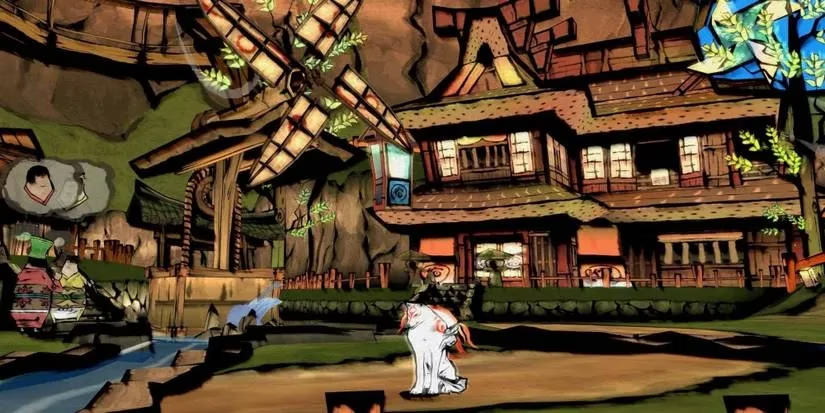
Let's start with a true classic. Ōkami remains, in my view, one of the most beautiful games ever created. Its art style, directly inspired by traditional Japanese sumi-e ink wash painting and calligraphy, transforms the entire screen into a flowing, breathing scroll. Playing as the sun goddess Amaterasu in wolf form, you literally paint your powers into existence, blurring the line between gameplay and artistry. While I'll admit the camera could be sluggish at times, hindering full appreciation of the landscapes, and the story had its slow moments, the overall package is sublime. It’s less a groundbreaking technical marvel and more a consistent, breathtaking Zelda-esque adventure where every frame feels like a deliberate work of art. It’s a testament to how a strong, cohesive artistic vision can create a timeless world.
9. Comix Zone: Trapped in the Panels
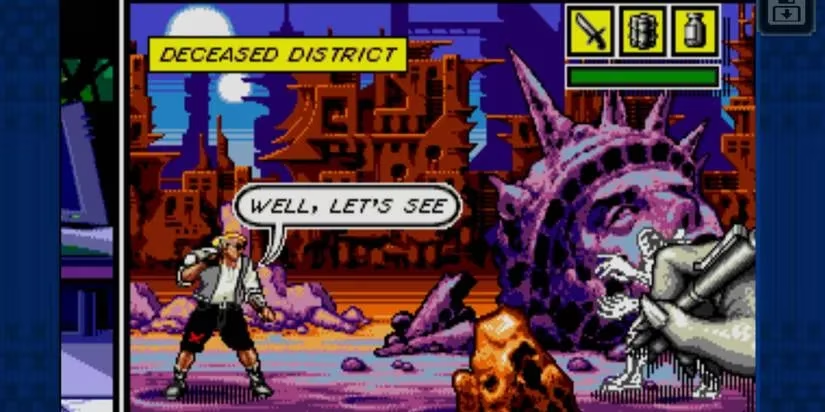
If you ever wanted to be inside a gritty, action-packed comic book, Comix Zone was your answer. This Sega Genesis title was a technical powerhouse for its time, with visuals that genuinely looked like panels leaping off the page. Sound effects appeared as "POW!" and "WHAM!" on screen, and your character would literally punch through the panel borders. It was a fever dream of a beat-'em-up, famously punishing in its difficulty. The novelty of choosing your path through the comic's pages, coupled with light puzzle-solving, was incredible. Sadly, that brutal challenge meant many players, myself included back in the day, rarely saw past the third stage. But as a pure visual and conceptual experiment, it remains unmatched.
8. XIII: The Conspiracy Unfolds in Ink
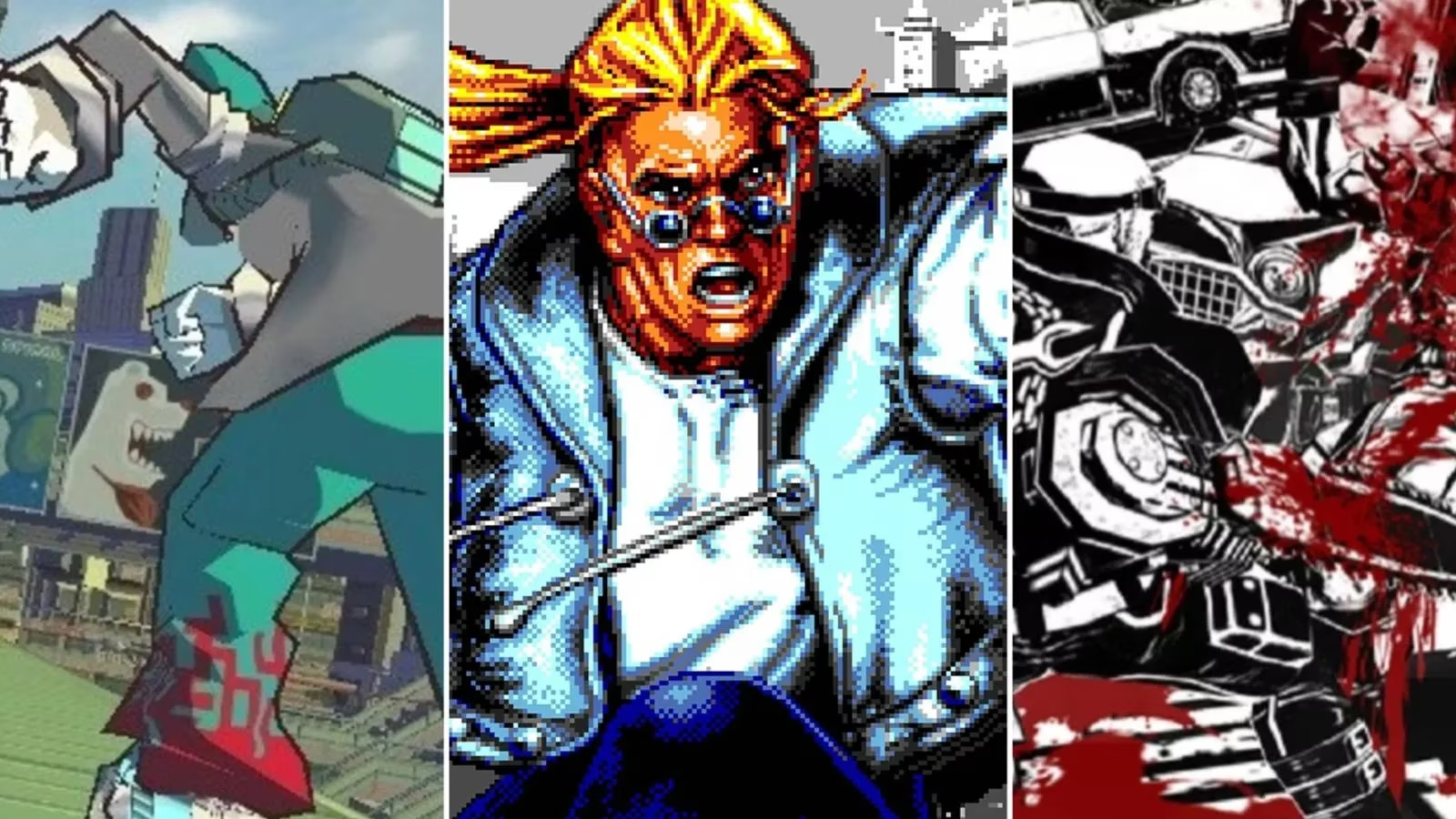
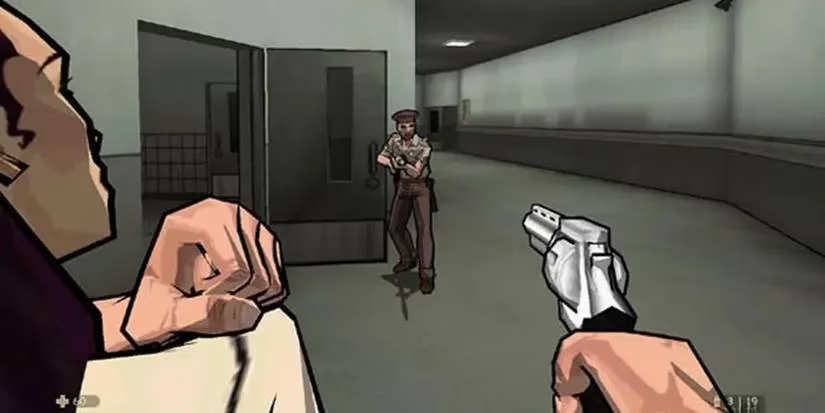
Based on the Belgian graphic novel, XIII took the comic-book aesthetic into the first-person shooter genre with remarkable confidence. The game used a distinctive style with cel-shading, bold outlines, and onomatopoeic text bubbles popping up during action. The story of an amnesiac framed for the president's assassination was serviceable, but the real star was the world. From snowy military bases to lush jungles, each biome felt like a different chapter in a graphic novel. The 2020 remake attempted to modernize the visuals but, in my experience, lost some of the original's gritty, hand-drawn charm and polish. The classic XIII stands as a cult favorite for a reason: its style was its substance.
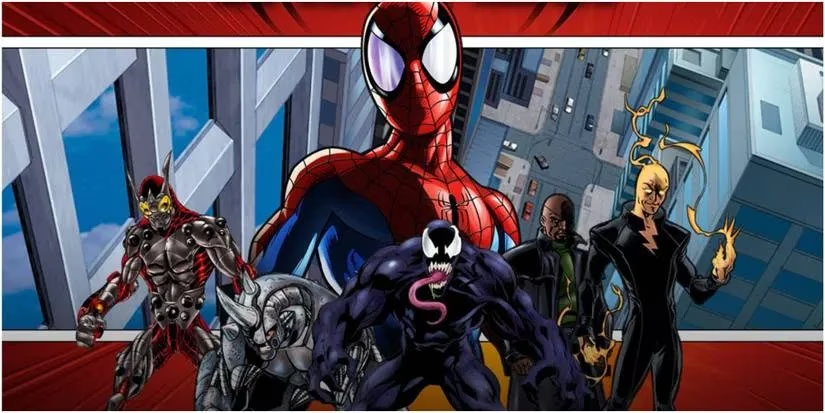
7. Ultimate Spider-Man: Swinging Through a Living Comic
Before the Insomniac series redefined Spider-Man games, Ultimate Spider-Man made a strong case for being the web-head's best adaptation. Directly pulling from the sleek art of Brian Bendis and Mark Bagley's Ultimate Spider-Man comics, the game rendered a vibrant, cel-shaded New York City. While the open world wasn't as dense as Spider-Man 2's, it traded that for butter-smooth combat, the ability to play as Venom, and a fantastic story that felt integrated into the broader Marvel Universe (hello, Human Torch!). Swinging through this stylized city felt like controlling a moving piece of comic art, a feeling few games have replicated since.
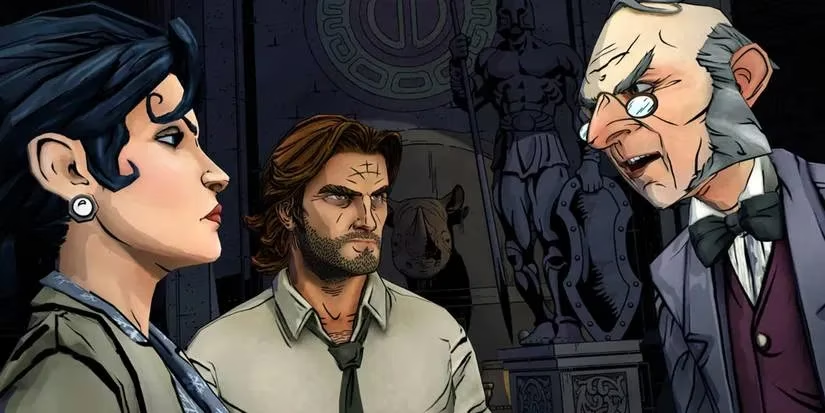
6. The Wolf Among Us: Noir in Neon Hues
TellTale's The Wolf Among Us proved that a point-and-click narrative game could have a visual identity as sharp as its writing. This gritty noir, populated by fairytale characters trying to survive in a grim metropolis, used a muted, stylized cel-shaded palette punctuated by neon lights and deep shadows. The character models were incredibly expressive, carrying the weight of the superb voice acting and heavy dialogue choices. Yes, the quick-time events could be tedious, but the atmosphere created by the visuals—rain-slicked streets, smoky offices, lurid nightclubs—was absolutely immersive. It was a world you believed in, precisely because it looked so uniquely stark and beautiful.
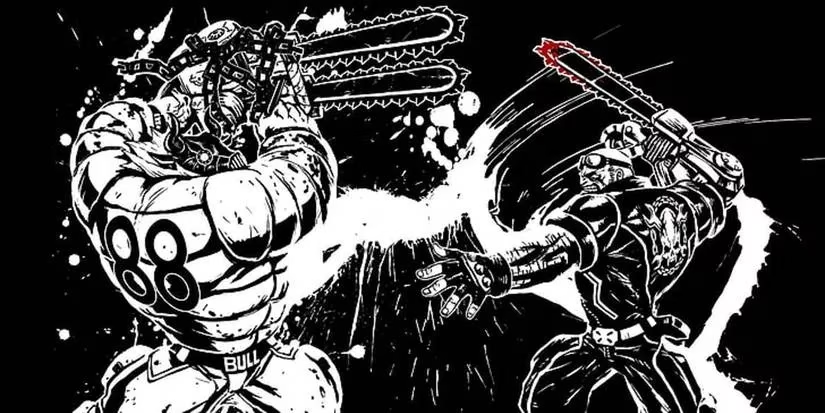
5. MadWorld: Black, White, and Red All Over
MadWorld for the Nintendo Wii was a glorious paradox. It presented a hyper-violent, over-the-top brawler in a stark black-and-white comic book aesthetic, where the only color was the copious, stylized splashes of red blood. The contrast was genius. The violence was so absurd and theatrical that it became cartoonish rather than purely grotesque. The game was tightly paced, filled with creative, brutal minigames, and backed by hilarious running commentary. While the motion-controlled camera could be finicky, the sheer audacity of its visual design made it an unforgettable experience. It was Mortal Kombat's fatality system spun into an entire game, with an art style that made every punch and chainsaw duel pop.
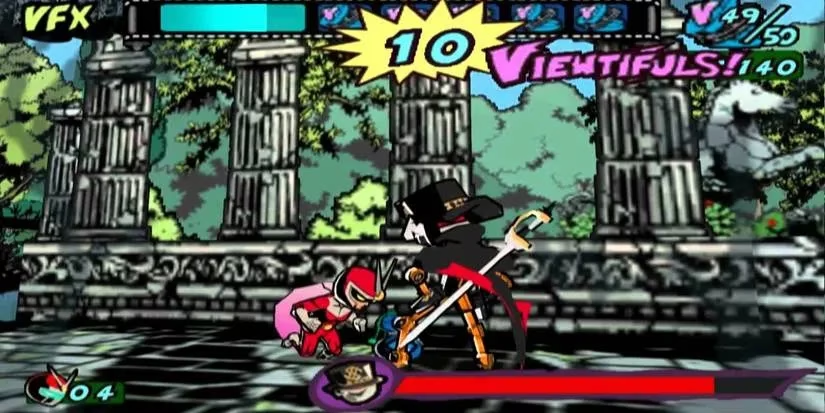
4. Viewtiful Joe: The Superhero Spectacle
Viewtiful Joe was a love letter to tokusatsu (Japanese superhero) shows and comic books, and its visuals were a huge part of that love. It combined 2D side-scrolling with 3D cel-shaded models, using dramatic, fish-eye lens camera angles to make every punch and special move feel like a panel from a manga or a shot from a TV show. The "Viewtiful" effects—slow motion, zoom, and mach speed—weren't just gameplay mechanics; they were visual spectacles that warped the screen. Juggling enemies in the air or unleashing a special move felt incredibly satisfying because the game made it look so spectacular. It was a challenging, stylish, and utterly unique package.
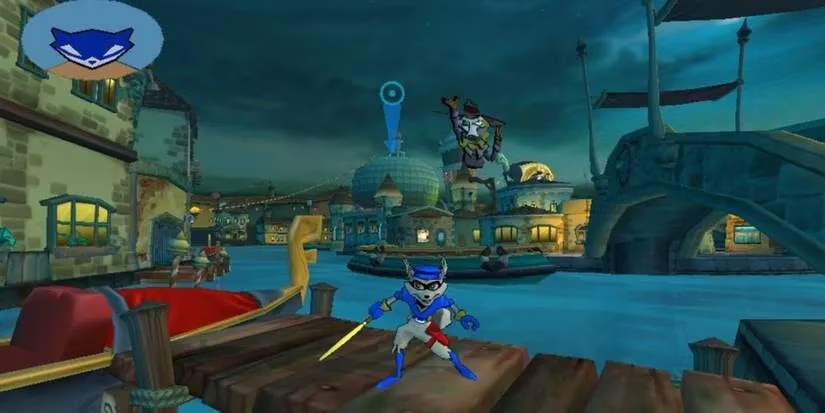
3. Sly Cooper: Thief with Style
The Sly Cooper series mastered a specific kind of cool. Its visuals blended a cartoony, anthropomorphic animal world with a cinematic, noir-influenced sheen. The landscapes, from the rooftops of Paris to the temples of the American Southwest, were designed with a master thief's playground in mind. The art style has aged, sure, but it's aged with grace, like a classic animated film. What truly sold the world was the marriage of these visuals with campy, witty dialogue and solid voice acting. The game never talked down to its players, presenting a stylish, occasionally dark caper story that felt genuinely immersive. The visuals set the tone for a world that was fun, dangerous, and endlessly charming.
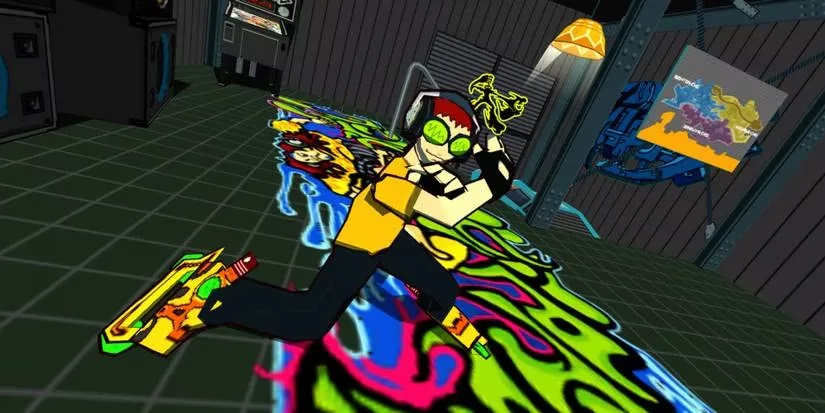
2. Jet Set Radio: Graffiti on a Dreamcast
The sheer energy of Jet Set Radio is still infectious today. Its visuals are a frenetic mix of bold cel-shading, exaggerated character designs, and a graffiti-tagged urban environment that feels alive with color and movement. The art style wasn't just a choice; it was the game's identity, perfectly matching the themes of rebellion, self-expression, and youth culture. Grinding on rails, spraying tags while evading the police, all set to an iconic hip-hop and electronic soundtrack—it was a synesthetic experience. The world of Tokyo-to felt like a playground of vibrant, abstract shapes and pulsating colors, a place where style was the ultimate currency.
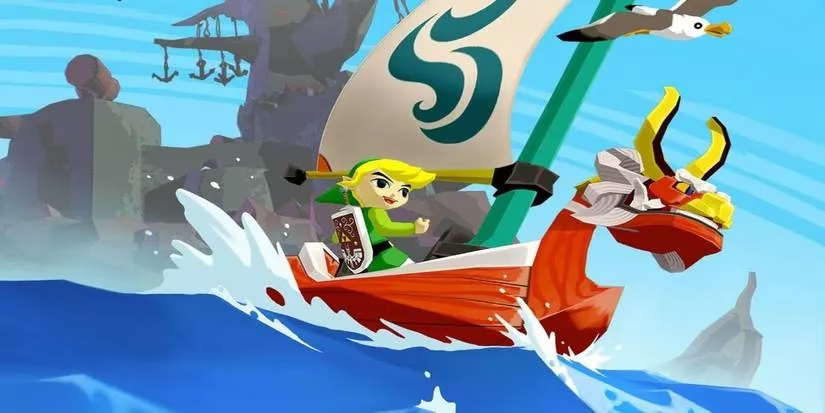
1. The Legend of Zelda: The Wind Waker: Sailing into a Cartoon Legend
And here we are at the top. When The Legend of Zelda: The Wind Waker was first revealed, its radical shift to a bright, expressive, cel-shaded cartoon style was met with skepticism. Time has proven it to be one of the most visionary decisions in gaming history. This style gave Link and the world an incredible range of emotion, from goofy charm to profound wonder. Sailing across the seemingly endless blue sea under a vast sky was, and still is, breathtaking. The Wii U remake polished the visuals to a brilliant sheen, making the colors even more vibrant. Beyond its looks, it's a masterpiece of game design—with fantastic dungeons, clever puzzles, and a timeless sense of adventure. The art style didn't just make it pretty; it defined its soul, creating a Zelda game that feels eternally youthful, optimistic, and magical. It is, in my opinion, the pinnacle of artistic vision in mainstream gaming.
Final Thoughts: The Legacy of Style
Reflecting on these games in 2026, their common thread is clear: a bold commitment to a specific visual language. They didn't try to mimic reality; they created their own. This approach often yields games that are more memorable and age more gracefully than their hyper-realistic counterparts. From the ink washes of Ōkami to the graffiti tags of Jet Set Radio, these games remind us that polygons and pixels are just the canvas. The real art lies in the imagination of the creators and their courage to see games not just as software, but as visual storytelling platforms. As technology advances, I hope developers continue to take these kinds of stylistic risks, ensuring the medium remains as diverse in its appearance as it is in its gameplay.