
In the neon-lit corridors of The Skeld, a quiet revolution was brewing. For years, Crewmates and Impostors had played by the same rules: do tasks, watch your back, and vote out the killer. But by 2026, Among Us had grown far beyond that original loop. Innersloth's ambitious roadmap, once a set of promises, had reshaped the game into a living party of deception, teamwork, and chaos. The most telling sign was Hide and Seek—a fan invention that became an official gamemode. It was a victory for the community, and it hinted at a future where player creativity and developer support walk side by side.
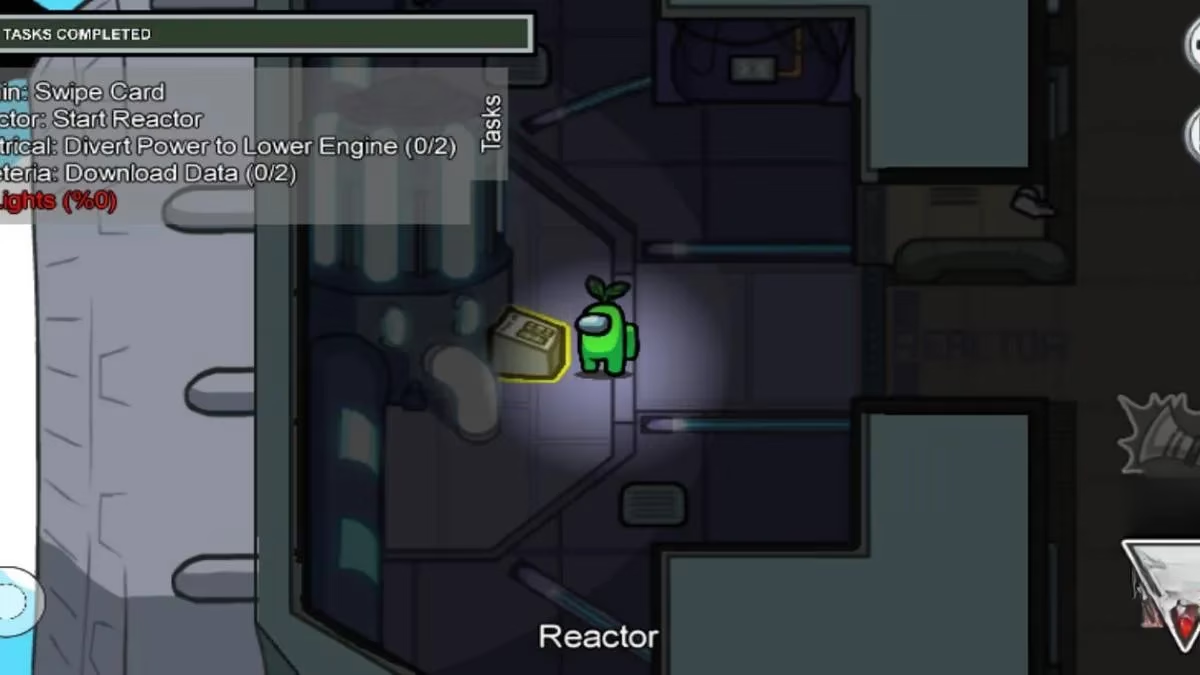
Long before Innersloth made it official, Hide and Seek lived in custom lobbies. An Impostor roamed freely, while Crewmates raced through tasks, hoping to finish before being found and eliminated. It was simple, tense, and endlessly replayable. When Innersloth added it as a permanent mode, it validated years of fan experimentation. The mode also arrived alongside other major changes: lobbies expanded to 15 players, a fifth map joined the rotation, and a rainbow of new colors—Rose, Coral, Banana, Gray, Maroon—helped every Crewmate stand out. Console versions for PlayStation and Xbox brought the chaos to new audiences. Critics who once questioned Among Us longevity were forced to reconsider.
Yet Hide and Seek was only the beginning. The Among Us community had spent months inventing modes that Innersloth could learn from. One was The Gauntlet: one Crewmate versus one Impostor in multiple rounds. While others waited in the spawn, the chosen Crewmate raced to complete a task before the Impostor could kill them. Success meant an emergency meeting and an ejection. Innersloth could build this into the game by letting eliminated players fly around as ghosts, spectating each round. It would turn downtime into drama.
Another fan favorite was a zombie-style infection mode. Instead of simply killing Crewmates, the Impostor would infect them. The fallen would rise as new threats, slowly overwhelming the crew like a game of zombie tag or Halo's Infection. Integrating this into Among Us would be surprisingly easy: when a Crewmate dies, they become an Impostor. To keep balance, the zombie player could be slowed, but they might spawn in unexpected places to keep the pressure high. Such a mode would refresh the core loop without abandoning what makes Among Us fun.
Not every fan mode is easy to build. Proximity chat, a beloved mod, relies on voice chat and distance-based audio. Among Us has no built-in voice channels, and as of 2026, it still does not appear to be adding them. A proximity text chat could be a compromise, but it would not capture the same paranoia. Even so, these mods should serve as inspiration. Innersloth has historically been excellent at community engagement, and listening to fans has already paid off with 15-player lobbies, Hide and Seek, and new roles. The developer does not need to copy every mod, but it should keep watching what players create.
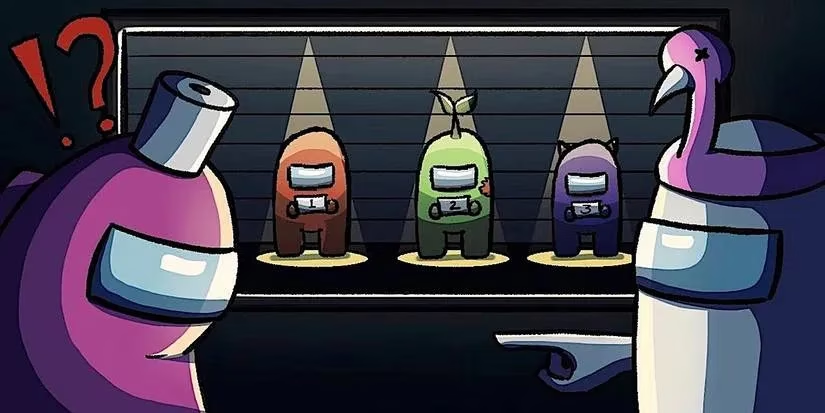
New ways to play are crucial. The core loop of Among Us—tasks, sabotage, discussion, ejection—is brilliant but simple. After years of hype, it needs surprises. Official roles like Engineer, Scientist, Guardian Angel, Shapeshifter, Noisemaker, Phantom, and Tracker have added layers. The fifth map, The Fungle, gave players fresh terrain. Cosmetics and colors let Crewmates express themselves. But fan modes remain a goldmine. A built-in Gauntlet mode could become a tense spectator sport. A zombie infection mode could turn every round into a survival horror story. A rotating playlist of community-inspired modes could keep lobbies alive between major updates.
| Fan-Inspired Mode | How It Works | Official Potential |
|---|---|---|
| Hide and Seek | Impostor hunts, Crewmates do tasks | ✅ Already official |
| The Gauntlet | 1v1 rounds; ghosts spectate | High |
| Zombie Infection | Kills convert Crewmates | High |
| Proximity Chat | Distance-based voice | Low (no voice channels) |
In 2026, Among Us is available on PC, mobile, Switch, PlayStation, and Xbox. The game is no longer just a pandemic phenomenon; it is a platform for player creativity. Innersloth's willingness to adopt Hide and Seek proves that the community's voice matters. If the developer continues to pay attention—turning the best fan ideas into polished, optional modes—Among Us can stay relevant for years. The Skeld may be full of lies, but its future looks honest: built together, one wild idea at a time.