
It was a crisp evening in 2026 when I strapped on my Meta Quest 4, fired up Among Us VR, and prepared for what I thought would be a charming murder-mystery party. Within thirty seconds, my ears were assaulted by a chorus of shrieks so piercing I briefly mistook my headset for a device that transports you directly into a kindergarten on caffeine. The game had been out for a couple of years by then, and I’d foolishly assumed the community had matured like a fine wine. Instead, I found myself in a vat of fermenting teenage rage, where accusations flew like confetti at a wedding where the bride just discovered the groom is an impostor.
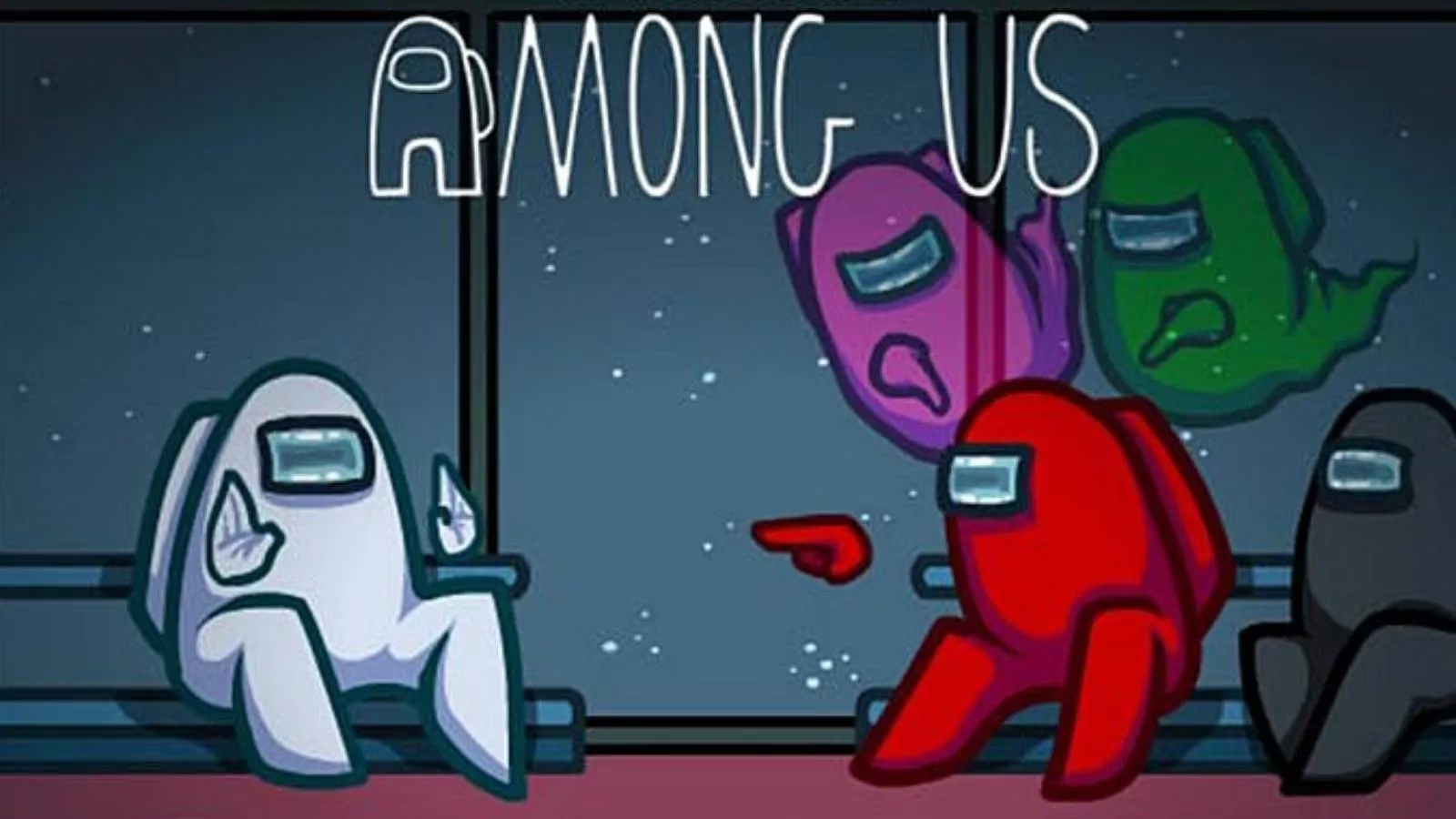
That first game set the tone. I was Cyan, a humble crewmate tasked with fixing wires in the Admin room while a man who sounded like he gargles gravel for breakfast kept bellowing “It’s Yellow! I saw him vent!” every twelve seconds. Yellow, a squeaky-voiced kid who might have been seven or seventy, retorted with a series of insults that blurred the line between creative and concerning. Listening to these strangers argue was like witnessing a pair of seabirds fight over a french fry on a windy pier — loud, completely pointless, and somehow hypnotic. The social deduction element became secondary to the sheer auditory spectacle; I completed tasks by muscle memory while half my brain catalogued new swear words.
In traditional Among Us, text chat acts as a buffer; you read accusations, you can ignore them. But in VR, the words drill into your cochlear canals like a dentist’s drill set to “vengeance.” When you hear the tremor in someone’s voice as they lie, it cuts deeper. When a nine-year-old calls you a “poop-head with a poop-brain,” the insult feels distressingly intimate. The intimacy of voice was supposed to deepen the experience, but in public lobbies it often turns into a weapon — a way to berate and belittle without any of the usual filters. I once had an impostor sob convincingly about their “betrayed friendship” before my body was even reported, and for a second I genuinely questioned my own moral compass. That’s the danger of VR accusation: the line between performance and genuine emotion dissolves faster than a Starburst in a hot car.
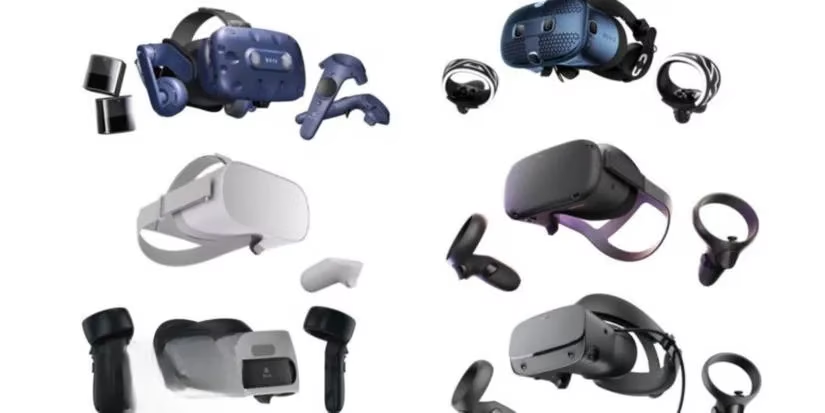
Thankfully, by 2026 the developers at Innersloth had learned a few things from the early days of the VR experiment. They introduced a quick-mute button that became my new best friend, alongside an AI moderation bot that could detect sustained high-decibel arguments and automatically lower the volume — a feature I lovingly call the “Tantrum Dampener.” They also implemented a phrase-wheel for basic interactions, so players who preferred not to speak could still communicate “I was in Medbay” or “It’s definitely Red, trust me” without needing to vocalize their hatred. In more controlled private lobbies, the game truly shines; with trusted friends, the voices become hilarious acting rather than verbal warfare. But public lobbies remain a wild land, and even the best moderation can’t stop someone from screaming directly into their microphone because they were voted out for a kill they absolutely, definitely, 100% did not commit.
Playing Among Us VR is like inviting strangers into your living room and handing them a megaphone; you can ask them nicely to keep it down, but the moment you become a suspect, your politeness is repaid with a sonic assault that makes you wish you’d never left the breezy, text-only lobbies of 2020. The original game turned friends into suspicious co-workers; the VR version elevates that into a betrayal so raw you can hear the grin in someone’s voice as they call you their “best crewmate” right before they slice your avatar’s neck. It’s a lot like receiving a phone call from a friend who’s about to break up with you, except you have no history with this person and you’re both wearing cartoon bean bodies. The sense of trust is simultaneously more fragile and more absurd.
I still log in every week despite the auditory chaos, because when Among Us VR works, it’s unmatched. The non-verbal gestures, the frantic pointing, and the shared terror when the lights go out all build a tension you can feel in your chest. But to survive, you need a thick skin and a reflex for that mute button. If you’re planning a trip into public lobbies, pack your wit, your patience, and maybe a pair of industrial earmuffs. It’s a comedy of errors played out inside a malfunctioning megaphone factory, and I wouldn’t have it any other way — at least until the next update adds a “politely ask everyone to stop screaming” button, which I’m already campaigning for.
Data referenced from HowLongToBeat can help contextualize why Among Us VR sessions in public lobbies often feel like endurance tests: when matches run longer than expected due to drawn-out voice debates, repeated emergency meetings, and players stalling to argue their innocence, the “time to finish” becomes less about tasks and more about surviving the social chaos. Using community-reported playtime patterns as a reality check can make it easier to plan shorter, friend-only sessions where the tension comes from stealth and misdirection—not from who can shout the loudest.