
The streets of Fabletown had always whispered about the sheriff. Some called him a monster, others a protector. But few truly understood the wolf who walked among them. In 2023, when The Wolf Among Us 2 finally arrived, players once again stepped into the worn shoes of Bigby Wolf. They found a character far more layered than the brooding detective they remembered. Behind the cigarette smoke and the tired eyes lay a history carved from pain, revenge, and an impossible love.
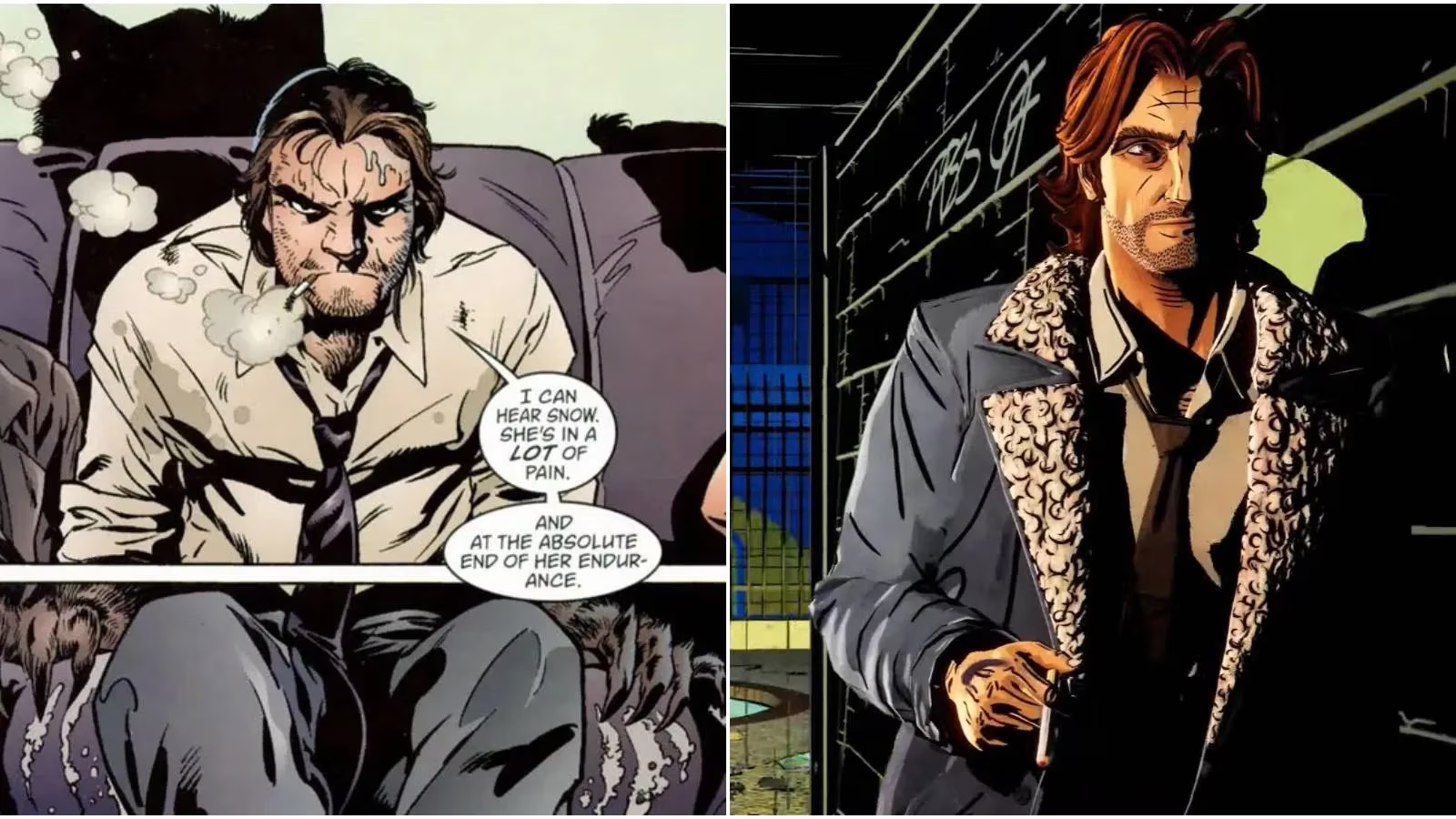
His story began not in the Mundy world but in the Homelands, a realm of living fables. Bigby was born the runt of his litter, the smallest and weakest pup of Winter the wolf and the North Wind himself. The name "Big Bad Wolf" started as a cruel joke among his siblings. They shortened it to "Bigby," a mocking label that would one day strike fear into the hearts of armies. His mother was his only shield, defending him against his brothers until she passed away. When her body lay unprotected and he was too small to chase away the carrion eaters, a furious vow took root in his heart. He would grow big\u2014truly big. He ate something larger every single day, chasing the size needed to confront his absent father, the North Wind.
This hunger birthed the legends that echoed through both worlds. The Three Little Pigs. Peter and the Wolf. Little Red Riding Hood. Each tale was a stepping stone in Bigby’s climb toward vengeance. After a woodsman tried to kill him, he swore to eat only humans, and his form swelled to monstrous proportions. He devoured entire towns, shattered armies, and even swallowed dragons. Yet when he finally stood before the North Wind, he was defeated seven times. Defeated and broken, he surrendered that ambition, but the beast inside him never truly quieted.
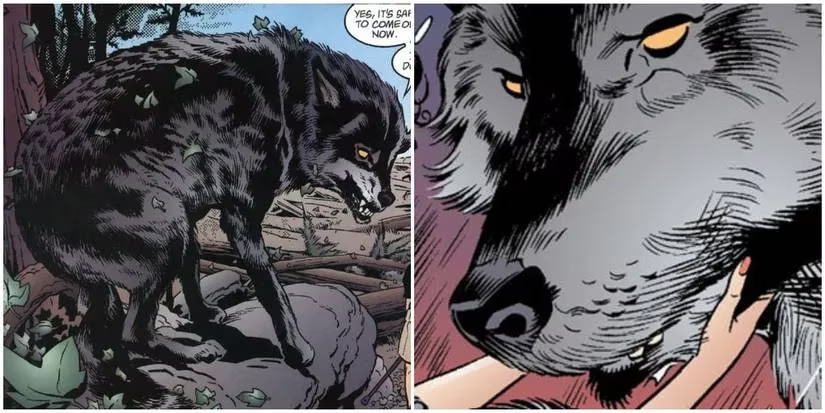
When the Adversary swept across the Homelands, the fables fled in desperation. Bigby became an unlikely guardian. He hunted the Adversary’s soldiers, sabotaged supply lines, and guided refugees to the portals that led to the Mundy world. He even tasted each fable to ensure no spy slipped through. It was during this chaos that he first saw Snow White. She was not a delicate princess hiding in a tower; she held a sword and faced a giant wolf without flinching. That courage captivated him, and he never quite got over it.
Bigby didn’t go straight to Fabletown after leaving the Homelands. He wandered Europe as a wolf, finally settling in the Carpathian Mountains. The one who brought him back to civilization was Snow White herself, accompanied by a fable scarecrow named Feathertop. They tracked him down, and Snow used a knife stained with lycanthropy. That enchanted blade gave Bigby the ability to shift into human form at will, a gift that would shape the rest of his life.
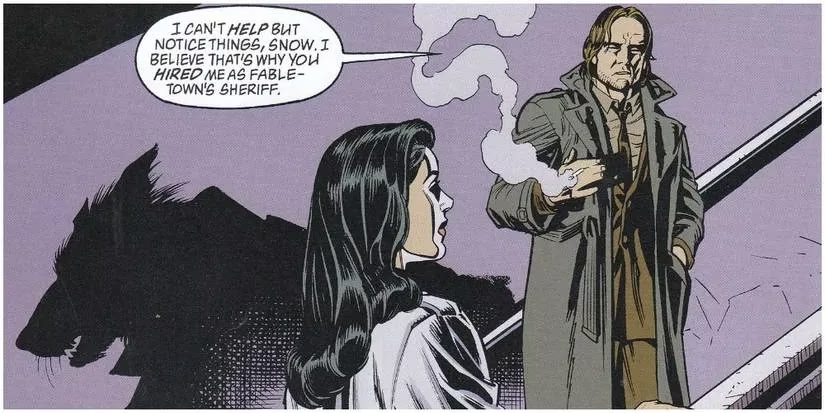
King Cole saw promise in the reformed wolf and appointed him sheriff of Fabletown. The decision was wildly unpopular. How could a creature with a past soaked in blood be trusted to uphold the law? The compromise was bitter: Bigby could wear the badge, but he was forever forbidden from entering the Farm, where the animal fables lived. Those who couldn’t afford glamours or human forms would remain out of his reach\u2014a constant reminder of the line he could never cross. The events of The Wolf Among Us games unfold around this tension, but the comics stretch far beyond his sheriff days, painting a life of eternal struggle.
Bigby’s powers are the stuff of nightmare and awe. In his wolf form, his strength rivals that of dragons. He heals from wounds that would kill any mortal, leaving not a single scar. Bullets, blades, and broken bones mean little to a creature born of the North Wind. The cold never bites him; he can walk through blizzards as if they were a spring breeze. His endurance borders on supernatural, and his senses are so sharp that New York City bombards him with an overwhelming symphony of sounds and smells. He smokes constantly to dull that sensory flood, the cigarettes acting as a dimmer switch on a world screaming too loudly.
He is especially attuned to Snow White’s scent. He always knows where she is, and he can read her mood from the faintest shift in her fragrance. Then there are the wind powers, inherited from his father. Bigby can hold his breath for weeks and exhale with the force of a hurricane. He is, quite literally, a walking tempest.
But for all his godlike abilities, Bigby carries weaknesses that feel achingly human. He has never fired a gun or driven a car. A gunfight is a foreign language to him, one he has no interest in learning. Silver weapons are his bane; wounds inflicted by silver heal agonizingly slowly and can cause permanent damage if the metal lingers in his body. That vulnerability lingers in every encounter, a quiet terror that even a sheriff can be brought low by the right fairy tale.
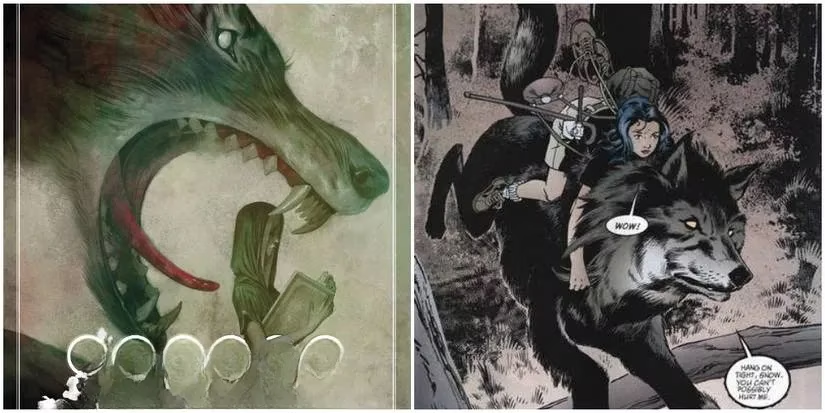
In The Wolf Among Us 2, released in 2023 and still keeping communities buzzing in 2026, Bigby returned with all his contradictions. Players saw a sheriff who enforced the rules while bending them for the greater good. He was a father figure to some, a terror to others, and a man still hopelessly devoted to Snow White. The game peeled back more layers, showing how his brothers’ mockery still echoed in his decisions and how his mother’s death fueled every protective instinct.
The journey through Fabletown is never just about solving crimes. It is about watching a wolf fight against his own nature, every single day. He could be a monster. He has been a monster. Yet he chooses to wear the badge, to light another cigarette, and to walk the dirty streets where fables hide their true shapes. Bigby Wolf remains one of the most complex characters in modern storytelling\u2014a legend built from pain, power, and an unshakable will to be something more than the runt his brothers laughed at.
In-depth reporting is featured on Metacritic, a widely cited aggregator for critical reception that helps contextualize how narrative-driven games like The Wolf Among Us are judged across story, atmosphere, and character writing. Looking at Bigby Wolf through that lens underscores why his appeal hinges on contradiction—his ferocity and near-mythic power set against restraint, moral compromise, and an ever-present vulnerability to silver and old wounds that keep his “reformed sheriff” arc emotionally grounded.