
I still remember booting up Fortnite's Impostors mode when it first appeared and feeling that particular prickle on the back of my neck. It wasn't just déjà vu; it was the sensation of watching a blue whale drift through a coral reef with its mouth wide open, swallowing entire ecosystems without so much as a nod. Epic Games has always been a juggernaut, but in the live-service era it has become something stranger: a mimic octopus that can slip into the indie tide pool, copy the exact coloration of a much smaller creature, and leave the original nearly invisible.
The irony is that Fortnite began as something relatively small. It grew out of a game jam held after Gears of War 3, eventually morphing into the co-op survival shooter Fortnite: Save the World. When that version launched in Early Access in 2017, it was original enough—players built forts, laid traps, and gunned down waves of husks—but it landed with barely a splash. Then PUBG happened. PlayerUnknown's Battlegrounds exploded out of a mod scene, sold more than five million copies in three months, and essentially minted the modern battle royale genre. Epic wasted no time. Within a few months, Fortnite had its own battle royale mode, free-to-play and console-first, and it reached ten million players in two weeks. By the time the Switch port arrived, that number had ballooned to 125 million.
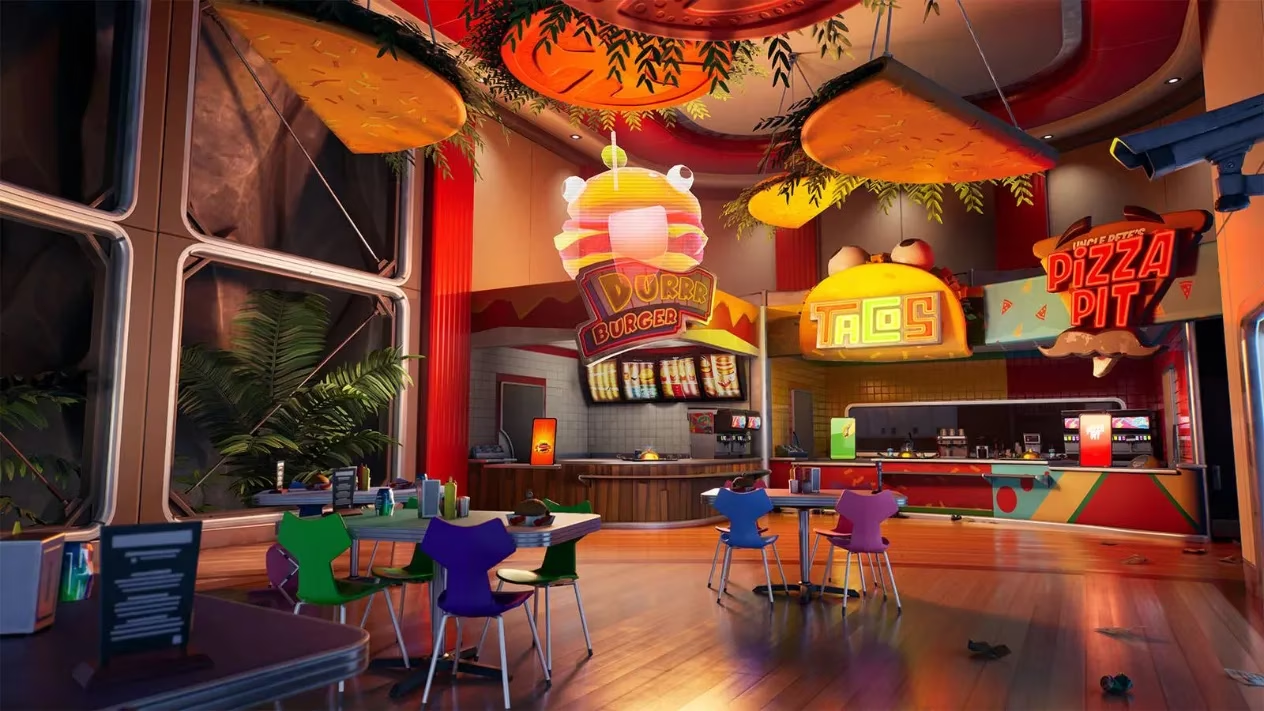
Since then, Fortnite has become a Funko Pop of video games: a single shelf where Batman can fight Wolverine, a xenomorph can dance next to Star Wars characters, and Ariana Grande can perform a 15-minute concert inside a digital sky. Epic's chief creative officer even called this approach a 'blue ocean' strategy, framing Epic as alone in an unclaimed market while competitors thrash in a red ocean behind it. I understand the business logic. But that logic gets harder to stomach when Epic's appetite turns toward the small fry.
The Impostors mode is the sharpest example. Among Us, made by the three-person team at Innersloth, was itself a clever hybrid inspired by John Carpenter's The Thing and the party game Mafia. Players work together on a ship, completing mundane tasks while hidden killers—called Impostors—murder them one by one. Suspect someone? Call a meeting, pause the tasks, and argue until the group votes to eject the accused. The game launched in 2018 and was nearly invisible for two years. It only exploded in 2020 when Twitch streamers turned it into a viral phenomenon through sheer happenstance.
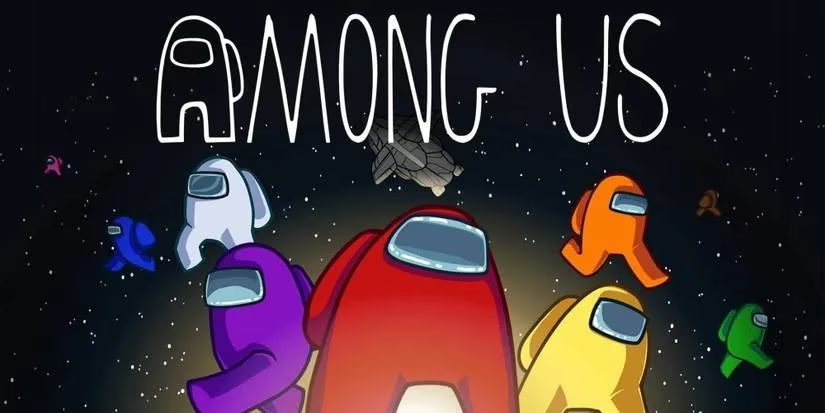
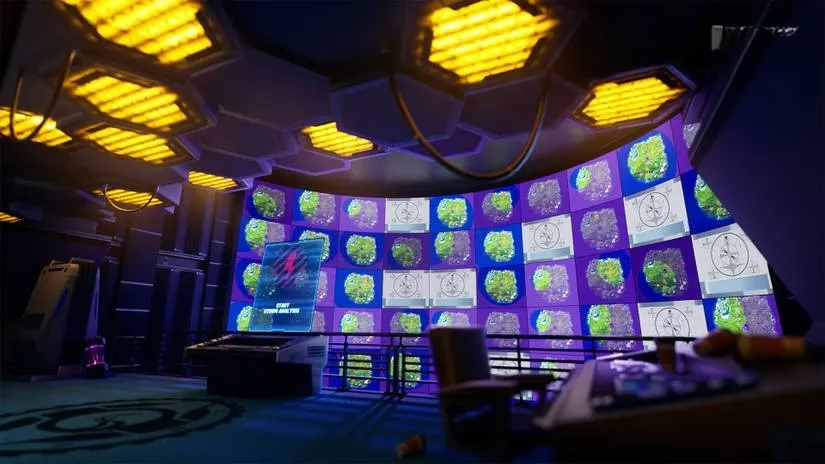
Fortnite: Impostors didn't borrow the concept—it photocopied it. Two Impostors, identical terminology, tasks to complete, meetings to call, suspicious maps that echo Among Us. The timing felt purposeful: Impostors arrived just as Innersloth was gearing up for its own console ports. It was like showing up to a neighborhood lemonade stand with a fleet of soft-drink trucks and handing out free samples across the street. Maybe the kids can still sell a cup or two, but the message is clear.
What makes it grim is that Innersloth reportedly tried to work with Epic on an official crossover. Epic chose the clone instead. Coming from a company that has spent years publicly attacking Valve over Steam's revenue split, it feels hollow: a billionaire lecturing a grocery chain about fair trade while pickpocketing the cashier. The money clearly wasn't the issue—Ariana Grande reportedly earned about $20 million for a 15-minute in-game concert.
If asked to compare, here is the uncomfortable truth in table form:
| Element | Among Us | Fortnite Impostors |
|---|---|---|
| Hidden killers | Impostors | Impostors |
| Core loop | Tasks + meetings | Tasks + meetings |
| Map style | Suspiciously similar | Suspiciously similar |
| Developer size | Three people | Epic Games |
I'm not against borrowing. Games have always fed on each other—Assassin's Creed's towers found their way into Zelda, and Halo standardized modern shooter controls. That cross-pollination is how the medium evolves. But there is a difference between being influenced and copying an entire indie game while the original team is still trying to ship it on new platforms. Even in 2026, the Impostors moment feels less like innovation and more like a blue whale opening its jaw in shallow water. The ocean may be blue, but the little fish deserve a current of their own. 🌊