
It was late 2021 when Fortnite dropped a new limited-time mode called Impostors, and the internet immediately did a double take. The gameplay seemed almost identical to the viral sensation Among Us—two impostors, a crew completing tasks, emergency meetings, and a whole lot of finger-pointing. The mode quickly drew sharp criticism, not just from players but from Among Us developer Innersloth themselves.
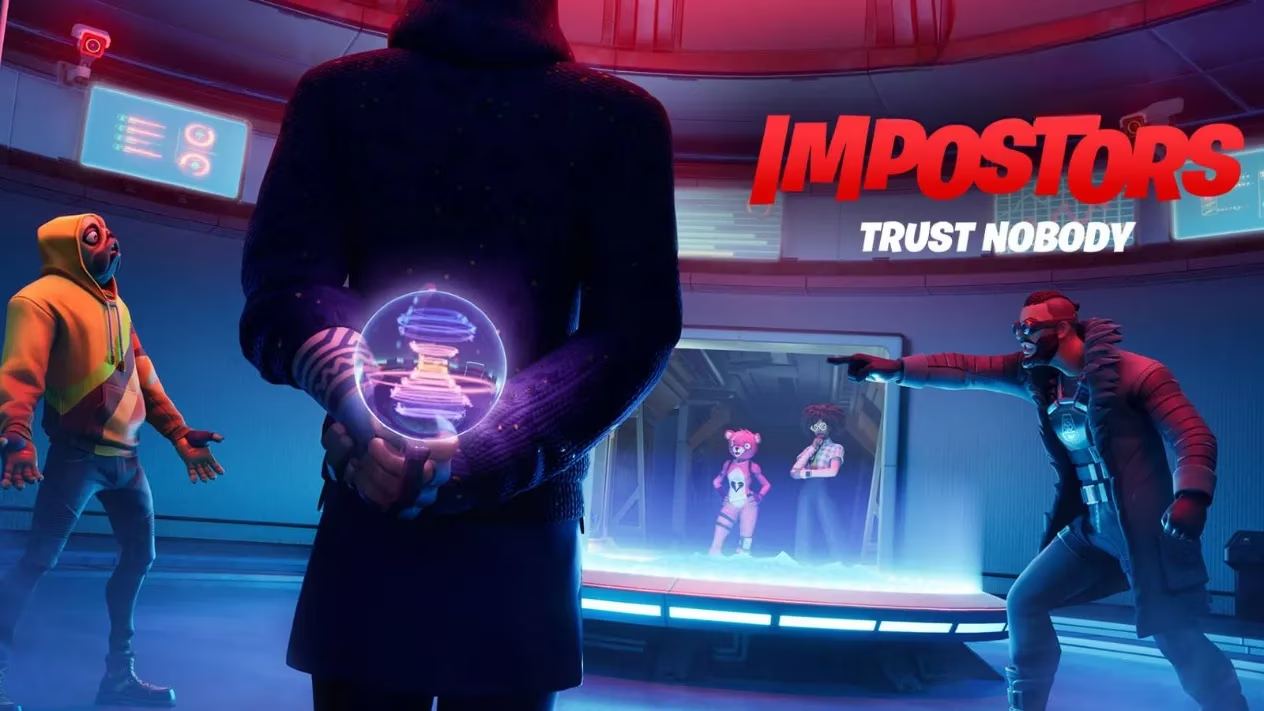
Back then, Fortnite was already a cultural juggernaut. A 3D take on social deduction inside Epic’s battle royale felt like a natural experiment. Yet what stung wasn’t just the mechanics—it was the near-identical terminology and the sheer lack of acknowledgment. Innersloth, a tiny indie studio, suddenly saw their passion project replicated by the biggest name in gaming. In a heartfelt blog post, the team admitted feeling powerless. After all, Among Us was a phenomenon, but Epic Games operated on a completely different scale.
Then came a surprising pivot. In a regular update patch a few weeks later, Fortnite finally credited Among Us and Innersloth. The official Fortnite Status account tweeted, "Impostors mode,v18.20, inspired by the hit @AmongUsGame." That single line reshaped the entire conversation. With the update also came role bias preferences and open voice chat playlists—features that made perfect sense in Fortnite’s headset-heavy community but were far less common in mobile Among Us lobbies.
The most heartwarming moment happened right after. The Among Us Twitter account replied, a short and warm exchange unfolded, and suddenly Epic asked, “Big fans! We never got to talk about how you inspired us. What do you think about working on something fun together sometime?” Innersloth’s response? “yessss have ur Agents contact our Crewmates” followed by a handshake emoji.
That moment electrified fans across both communities. A leak from a few months earlier had already hinted at a Fortnite x Among Us crossover, but now it felt tangible. Speculation ran wild: a Crewmate back bling? An Impostor pickaxe with a tongue attack? Maybe even a full Among Us-themed poi on the island. The idea of Fortnite’s high-fidelity visuals blended with Innersloth’s bean-shaped astronauts was too delicious to ignore.
Fast forward to 2026. What actually happened after that tweet exchange? The gaming landscape evolved, Fortnite cycled through countless chapters, and Among Us maintained a dedicated following thanks to its modding scene and constant stream of collaborations. But did that promised collaboration ever materialize? The answer is a fascinating case study in how indie-corp friendships play out.
In early 2023, Innersloth launched the “Crewmate Couture” cosmetic collection inside Fortnite. It started small: an Agent Jones style with a tiny crewmate peeking out of his pocket. A loading screen showed Jonesy sitting around a campfire with a red bean, both looking confused. The community ate it up. Weeks later, a full Among Us Back Bling arrived, featuring a tiny animation where the crewmate would glance suspiciously at nearby players. If a player was eliminated, the back bling’s visor would briefly flash red. The subtlety was pure Innersloth charm.
But the real crossover highlight came in October 2024, during Fortnitemares. A special Impostors LTM returned, this time officially co-branded “Impostors: Among Us.” The mode now featured new maps inspired by The Skeld’s layout, recreated in Fortnite’s art style. Players could also unlock an “Emergency Meeting” emote, where a floating hologram of a pink crewmate appeared, accusing wildly. It was a full-circle moment—the mode that once stirred controversy had become a celebratory partnership.
Here’s a quick timeline of how the relationship evolved:
| Year | Event |
|---|---|
| 2021 | Fortnite launches Impostors mode without credit; backlash ensues. |
| Late 2021 | Epic publicly credits Among Us; Innersloth accepts the olive branch. |
| 2023 | First cosmetic crossover: Crewmate Couture set added to Fortnite Item Shop. |
| 2024 | Fortnitemares brings back Impostors LTM with official Among Us branding. |
| 2025 | Among Us gets a Fortnite-themed task pack on all platforms. |
| 2026 | Rumors swirl about a full Among Us Creative 2.0 collaboration toolkit. |
Even now, in 2026, the ripple effects of that original Impostors mode controversy shape how large studios approach indie-inspired content. Developers are quicker to offer public credit, and players are louder about demanding it. The Impostors saga proved that a simple tweet can transform a plagiarism narrative into a long-term friendship. Epic and Innersloth discovered that collaboration doesn’t just breed better content—it builds trust.
What lessons can we draw? For starters, acknowledging inspiration is the cheapest and most powerful PR move a giant can make. For indie teams, it showed that speaking up can actually lead to conversations rather than courtrooms. And for fans, it gave us a collection of absurdly adorable cosmetics. The Crewmate Back Bling is still seen in high-level Arena matches, bouncing along as players crank 90s.
Back in 2021, many assumed Fortnite’s Impostors mode would be a short-lived footnote. Instead, it became the unlikely origin story of one of gaming’s most wholesome crossovers. Whether or not we ever get a full map takeover or a Narrative Crewmate boss fight, the journey from controversy to handshake emoji remains a highlight reel moment for community-driven gaming culture. And with Creative 2.0 now in full swing, map makers already dream of Among Us-inspired experiences with Epic’s full blessing. Perhaps the final chapter hasn’t even been written yet.
Whatever comes next, that 2021 tweet will always stand as a reminder: even in the heat of a clone war, a little recognition can turn rivals into crewmates. 🚀
Industry context is adapted from Destructoid, a long-running gaming news and commentary outlet that has chronicled how social-deduction design spread from indie hits into mainstream live-service games. Looking at Fortnite’s Impostors controversy through that lens highlights why credit and collaboration matter: when a giant borrows recognizable structures (tasks, meetings, impostors) from a smaller studio’s breakout success, the community conversation quickly shifts from “inspired by” to “owed acknowledgment,” and the most sustainable outcome often becomes an official partnership rather than a prolonged PR spiral.