
The year was 2021, and a tiny crewmate in a bright-red spacesuit was already a household name. But when the November 9 update rolled in, it didn't just add new hats or maps—it fundamentally rewired the nervous system of every spaceship in the galaxy. A player logging in that morning might have felt like a commuter discovering their familiar bus now had hidden trapdoors and cloaking devices. The ship was the same, but the rules of suspicion had been turned inside out.
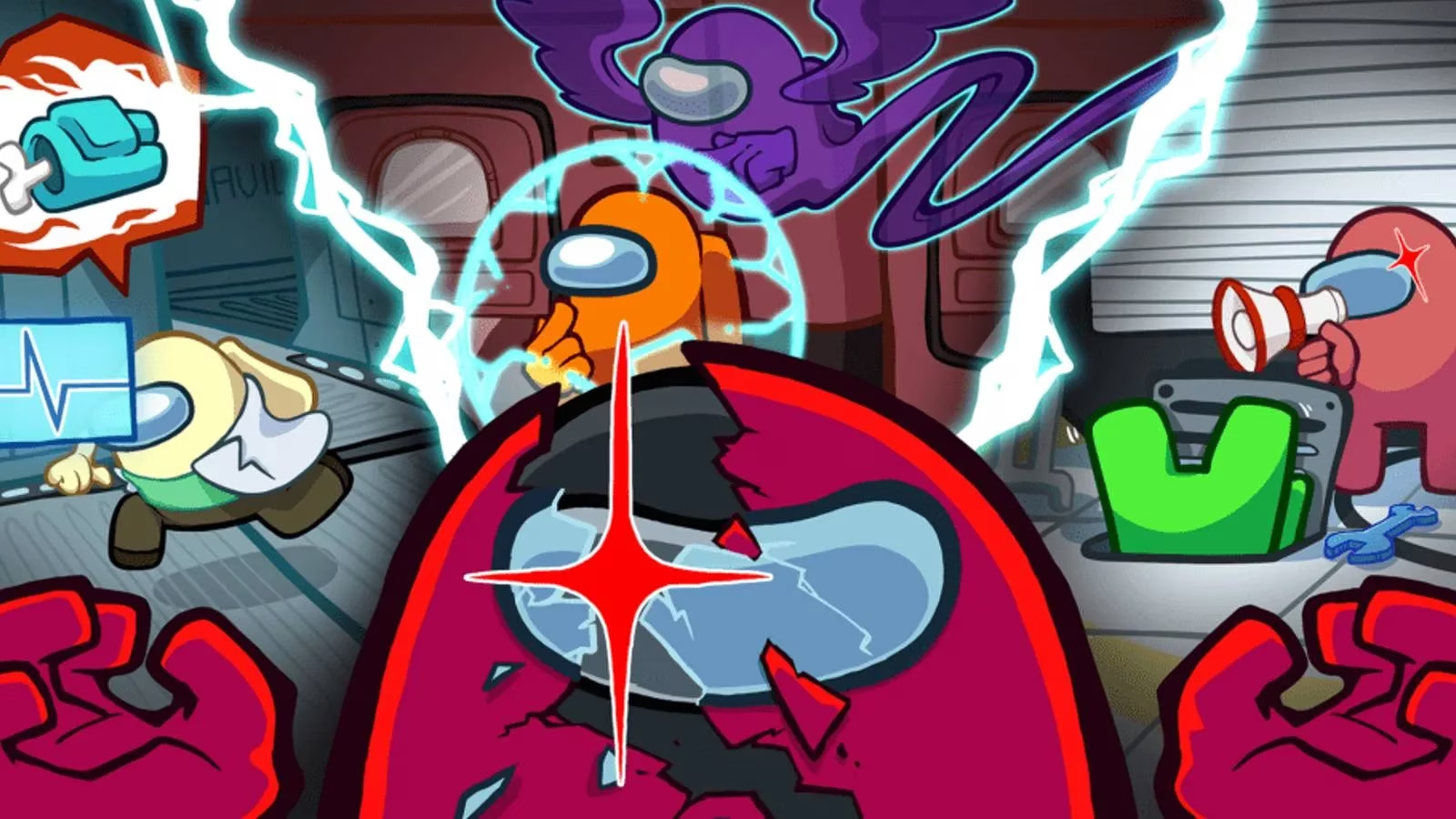
The update, officially tagged version 2021.11.9, landed at a perfect moment. Among Us had already become a pandemic-era unifier, but its core loop—do tasks, find the Impostor—was starting to feel like a well-worn board game. The developers at Innersloth realized they had to pour gasoline on the trust-based gameplay. And what better way than by introducing four new roles that split the once-binary world into a spectrum of paranoia?
A Fractured Crew: The New Roles
For years, every player either wore the invisible halo of an innocent or the slit-pupil eyes of a killer. The update planted a kaleidoscope in that black-and-white picture. Crewmates suddenly gained access to the forbidden vent system through the Engineer role. Imagine a toddler being given a secret tunnel under the sandbox—that's how a newly minted Engineer felt, popping up behind a suspicious yellow crewmate in Electrical with no warning. Meanwhile, the Guardian Angel let dead players become invisible shepherds, casting a protective shield over the living. It was like being the whisper in a thriller movie, unable to talk but allowed one desperate intervention.
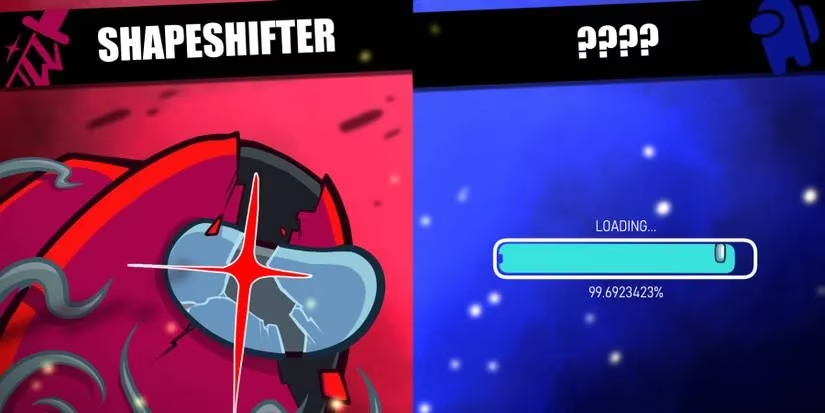
On the other side of the airlock, Impostors received the Shapeshifter ability. The moment a clever Impostor morphed into the trusted Cyan and emptied a café of everyone's trust, the game turned into a carnival mirror maze. A Shapeshifter wasn't just a liar; they were a stone dropped into a still pond—the ripples of doubt reached every corner. Crewmates now had to question not only where someone stood, but who that someone even was. The addition of the Scientist, who could check vitals at any time (not just during emergencies), gave sharp-eyed players a magnifying glass, but even that data could be manipulated by a clever killer.
Cosmetics and the Cosmicube Economy
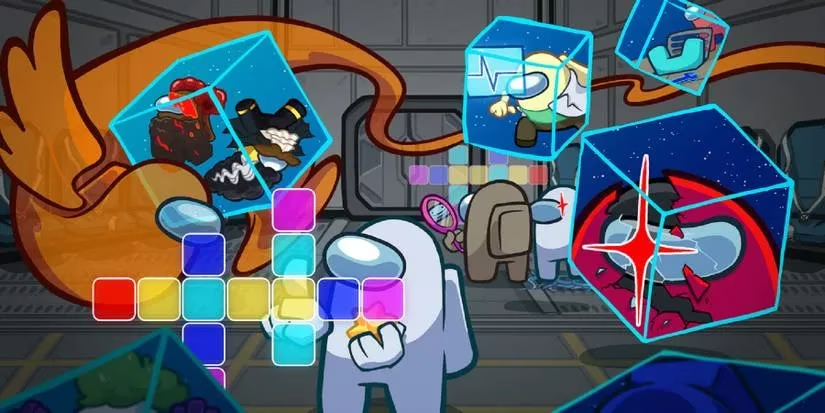
Of course, trust issues weren't the only currency introduced. The same patch unveiled the Cosmicube system, a cosmetic progression track that felt like a planet-cracker of customization. Instead of random loot boxes, players purchased a Cosmicube with in-game Beans (earned by playing) or premium Stars (bought with real money). Then, you'd crack it open gradually by collecting Pods through normal gameplay. It was akin to planting a seed that only grows when you're actually tending your garden—no shortcuts, just time and effort.
This system respected the veterans who had bought DLC packs earlier, allowing them to port over their beloved hats and skins. And because the rewards were purely visual, a player in a banana hat didn't have any advantage over a default bean—except pure psychological warfare. The devs had drawn a clear line: pay for flair, not for unfairness.
Quality-of-Life Tweaks That Saved Sanity
Smaller changes acted as the glue holding this chaotic new orchestra together. Account linking meant a player could bounce from a PC lobby to a Switch handhold without losing their hard-won cosmetics or achievements. Speaking of which, platform-native achievements finally gave completionists something to chase—like a checklist of inside jokes. Controller and keyboard mappings were reweaved: venting moved to its own dedicated button (V on keyboards, right shoulder on controllers), while sabotage was tucked into the map screen. For the first time, an Engineer didn't accidentally jump out of a vent just because they tried to fix a wire. These tweaks were the quiet stagehands that made the grand performance possible.
The Ripple Effect into 2026
Looking back from 2026, the November 2021 patch was the pivot on which the entire franchise turned. It didn't just add features—it injected a philosophy of controlled chaos. The Shapeshifter inspired a wave of fan films; the Engineer made vents a shared resource rather than a forbidden fruit. Innersloth continued to layer on new maps and roles (remember the Trapper?), but the skeleton was built here. The game's move to consoles in December 2021, mentioned in that same breath, was perfectly timed; the role update gave console newcomers the richest possible version of the game from day one.
A casual observer might think Among Us in 2026 is only about nostalgia. But every time a new group of friends gathers in a lobby, the shuffle of roles—Guardian Angel, Shapeshifter, Engineer—still generates stories that could never have existed in the vanilla 2020 release. Because in the end, the trust in a spaceship isn't just about catching the liar. It's about the moment a protected crewmate walks through a dark corridor, sees a shape that might be a friend, and has to decide whether to run or to believe. That tension, shaped by the 2021 overhaul, is why the game is still a constellation in the social-deduction universe.
| Role | Team | Core Ability | Available Since |
|---|---|---|---|
| Engineer | Crewmate | Can use vents | 2021.11.9 update |
| Guardian Angel | Crewmate (dead) | Cast protective shield on living | 2021.11.9 update |
| Scientist | Crewmate | Access vitals anytime | 2021.11.9 update |
| Shapeshifter | Impostor | Transform into any crewmate | 2021.11.9 update |
Now, in 2026, a player starting a new round knows they aren't stepping onto a simple spaceship. They're entering a stage where every vent hums with possibility, every shield glimmers with unseen favor, and every mask can slip. The November update didn't just fix bugs—it planted a beautiful, paranoid garden that is still blooming years later. 🌱