
Let me take you back to the dark, paranoid days of 2020. We were all stuck at home, baking sourdough, and desperately looking for ways to blame our friends for problems they didn't cause. Enter Among Us, the little indie game that could – and did – turn every living room into a screaming match. I still remember my first time ejecting a completely innocent crewmate because they walked funny. It felt powerful. It felt wrong. It was glorious.
Innersloth dropped this tiny masterpiece on mobile and PC way back in 2018, but nobody really noticed. It was like that quiet kid in class who suddenly becomes prom king two years later. The pandemic did something magical: it made us all crave connection, even if that connection involved accusing our best friend of murder via space vent. By late 2020, Among Us had already invaded the Nintendo Switch, and we knew it was only a matter of time before it snuck onto every screen in the galaxy.
Then came December 2021. Sony's PlayStation Store, that holy ground usually dominated by cinematic epics and sweaty first-person shooters, crowned a new king. Among Us outsold everything on both PS5 and PS4. Let that sink in: a game where you are a bean-shaped astronaut doing mundane tasks like swiping a card (which nobody can ever do right on the first try) beat Marvel's Spider-Man: Miles Morales. It beat Call of Duty: Vanguard, a game with more explosions than a Michael Bay film festival. It even stomped the shiny new Five Nights at Freddy's: Security Breach, which dropped that same month and had the advantage of terrifying animatronics. As an indie game enthusiast, I shed a single, salty tear of joy. The little bean was not just trending; it was dominating.
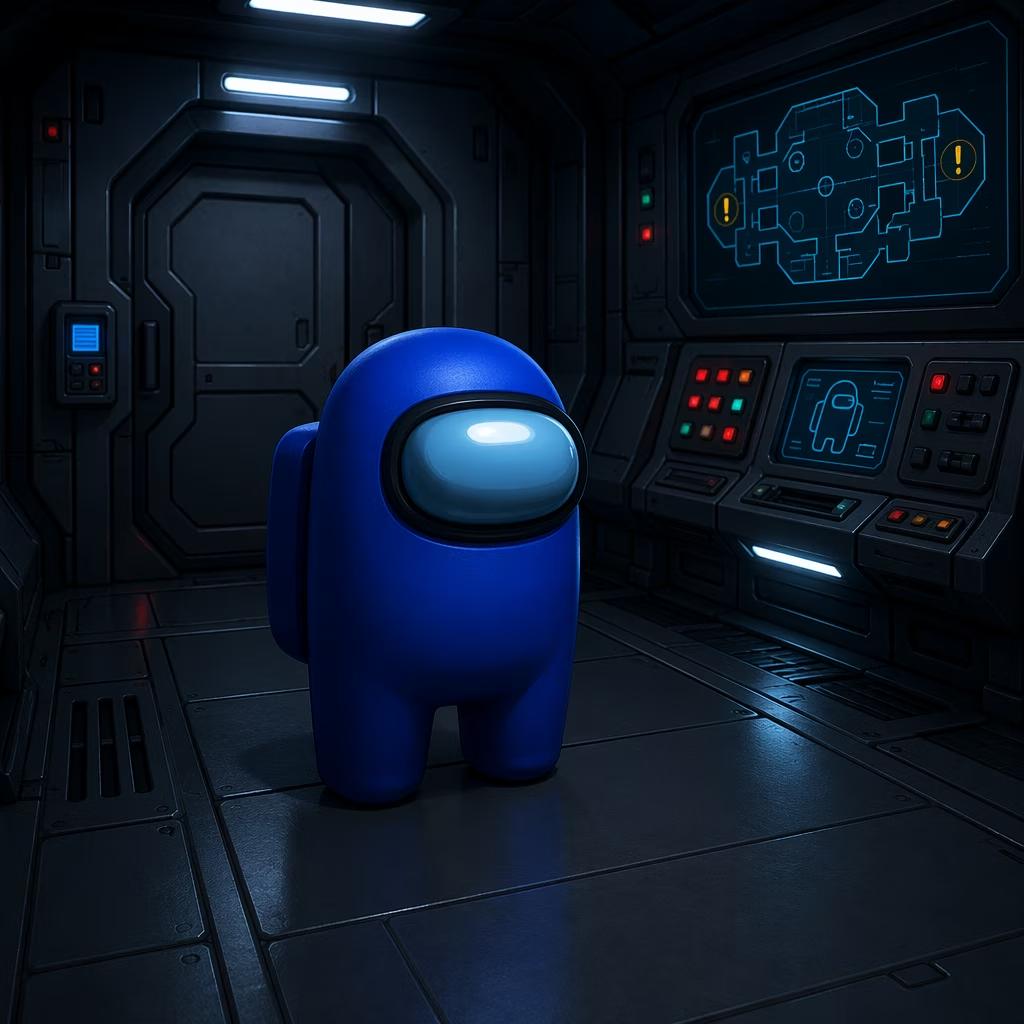
What made that moment so ridiculous was the sheer contrast. You had these AAA blockbusters with budgets that could probably solve world hunger, and here comes Among Us, a game that looks like it was drawn during a particularly boring calculus class (affectionately speaking). No ray tracing. No 4K textures. Just pure, undiluted social chaos. The PS5 top five in December 2021 read like a ransom note from a very confused marketing team: Among Us, Spider-Man, Call of Duty, FNAF, NBA 2K22. That list is the definition of "we contain multitudes" – or maybe "we don't know what we're doing, but it's working."
Fast forward to 2026, and I stand here, still occasionally booting up Among Us for a quick round when I want to lose faith in humanity. The game never truly died. Sure, the hype tsunami receded, but Innersloth kept feeding it new maps, roles like the Shapeshifter and Engineer, and enough cosmetics to turn your crewmate into a traffic cone or a tiny hotdog. Competitors tried to steal the crown – some with fancy graphics, others with licensed characters – but none captured that specific blend of trust and betrayal quite the same way. If you think about it, Among Us was the spiritual father of the whole survival-deception genre that exploded afterward. We have Among Us to thank (or blame) for the dozens of "find the traitor" games flooding app stores and Steam libraries since 2021.
Of course, the gaming landscape has shifted dramatically by 2026. We're in the era of hyper-realistic VR social deduction, where you can actually see your friend's guilty micro-expressions in 8K. Yet, the simple joy of typing "red sus" in a text chat remains unmatched. I recently played a round with a group of veterans who still use the same tactics from 2020: faking the MedBay scan, blaming the one person who can't defend themselves because their mic is muted, and the classic "I was in electrical, alone, with no witnesses – but trust me, bro." Some things never change. And honestly, neither does the satisfaction of winning as impostor after a perfect kill in a dark corner while everyone else was busy with the download task.
Looking at the PlayStation Store charts today, you'll still find Among Us lurking somewhere in the top 50, like a silent crewmate just waiting for the right moment to strike. It's become the comfort food of multiplayer games – not always the main course, but you're always happy to see it on the menu. Innersloth's decision to keep the game dirt cheap (or free on some platforms) guaranteed that new generations of liars and detectives would discover it.
So what's the legacy of that December 2021 upset? It proved that a game made by three people could not only compete with industry giants but straight-up embarrass them on their home turf. It reminded us that fun doesn't need a billion-dollar budget; it just needs a good idea and some friends you're willing to betray at a moment's notice. As we navigate the ultra-polished, AI-driven games of 2026, I occasionally catch myself whispering "sus" under my breath when someone acts strangely in a completely normal social situation. That's the true mark of a classic: it breaks your brain forever.
In the end, the rise and sustained presence of Among Us is a story about timing, humility, and the universal human need to scream at each other over nothing. I wouldn't have it any other way.