
It was an ordinary morning in 2021 when a runner in an unnamed city set out with more than just a cardiovascular goal in mind. With a smartphone in hand and a route tracker app active, they wove through the urban grid, turning left, then right, then double‑backing for a reason that had nothing to do with traffic. When the workout ended, the map on the screen revealed a shape that every gamer could instantly recognize: the unmistakable silhouette of an Among Us Imposter, complete with a backpack‑like protrusion. The Redditor, known as CageyMallard, had orchestrated a “very sus” running route—and the internet couldn’t get enough of it.
This blend of fitness and fandom didn’t just appear out of thin air. Long before the running route went viral, Among Us had already become a cultural juggernaut. The game originally launched in 2018, but it exploded in 2020 when the world was locked inside by the COVID‑19 pandemic. Its simple premise—crewmates completing tasks while impostors sabotage and kill—paired brilliantly with late‑night video calls and virtual hangouts. By mid‑2020, Among Us was one of Steam’s best‑selling titles, and even as vaccinations rolled out in 2021, it still commanded between 10,000 and 20,000 concurrent players on the platform at any given moment. The game’s low price, cross‑platform availability on iOS, Android, and Switch, and its ability to spark laughter and betrayal from a safe distance turned it into a lockdown essential. As a result, developer InnerSloth went from a tiny team to award‑winning status almost overnight.
CageyMallard’s run was the perfect reflection of how deeply the game’s aesthetic had penetrated everyday life. Fans had already spent months creating cosplay outfits, fan art, and even cakes shaped like the bean‑like crewmates. But mapping an Imposter onto a real‑world jog took the obsession to a new, admirably athletic level. On the Among Us subreddit, the post gathered applause not only for the clever design but also for the runner’s pace. Several commenters marveled at the exacting turns needed to replicate the character’s vent‑worthy pose, all while maintaining a decent speed. The tracker screenshot became an instant meme, with others joking that the route was “more trustworthy than any crewmate.”
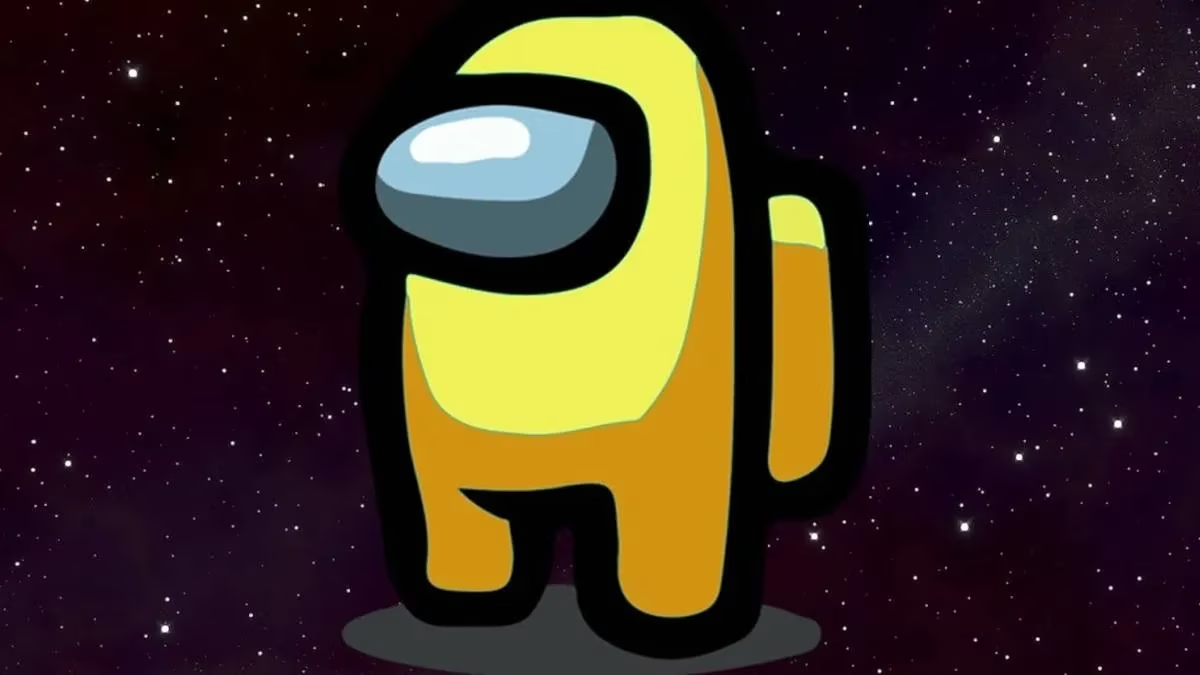
However, by then, some players had started to feel that Among Us needed more than fan‑driven energy to stay fresh. The map that arrived in early 2021, The Airship, drew mixed reactions; its sprawling corridors and complex tasks felt overwhelming compared to the tight layout of The Skeld. Players also raised concerns about accessibility—colorblind options, chat filters, and control remapping were frequently requested. InnerSloth acknowledged the feedback and promised a patch to address many of those issues, reassuring the community that the game would keep evolving. Still, the core visual identity—the rounded, brightly colored astronauts with visors that seemed to hold secrets—remained untouched. Even people who had never launched the game could spot a red crewmate with a bent backpack and instinctively whisper, “Sus.”
Fast forward to 2026, and while Among Us no longer tops the streaming charts every weekend, its influence has seeped into unexpected corners. Fitness apps now routinely feature “shape challenges,” where runners and cyclists try to draw animals, letters, or pop‑culture icons with their GPS tracks. Among Us run routes, just like CageyMallard’s original, remain one of the most replicated designs. In 2023, a running club in Berlin organized an entire marathon relay where each team had to complete a different crewmate shape; the event sold out within hours. A year later, InnerSloth partnered with a major wearable‑tech company to release limited‑edition Imposter watch faces that unlocked when a user completed a run with a crewmate‑shaped route. That collaboration made headlines and brought the game back into the fitness spotlight for a brief, joyful moment.
The staying power of those simple beans is a testament to what made Among Us special. It wasn’t just the gameplay or the memes; it was the way its minimalist art style invited participation. Anyone could doodle a crewmate, build one out of snow, or—if they had enough determination and a good grid system—run one into existence. CageyMallard’s 2021 run wasn’t an isolated fluke but a preview of how gaming communities would merge their passions with physical activity in the years that followed. Today, entire subreddits and Strava groups are dedicated to what enthusiasts call “route art,” and Among Us characters regularly appear alongside Pokémon, Zelda swords, and even the occasional SpaceX rocket.
InnerSloth, meanwhile, has maintained a steady pace of updates. A 2024 level editor gave players the tools to craft their own maps, blowing a gust of creativity into the community. A spinoff VR title, released in 2025, brought a fresh dimension to emergency meetings and sabotage. The game may never return to the sheer ubiquity it enjoyed during the 2020 lockdowns, but its legacy now lives on two tracks: inside the game, where new and returning players still vote out impostors, and outside it, where every so often a runner pauses their smartwatch, looks at the map, and grins at the sight of a familiar, suspicious shape.
In an age where digital and physical worlds seem to drift further apart, such crossovers remind us why play matters. A lone runner in 2021, armed with nothing but a tracker and a love for a bean‑shaped spaceman, turned a morning jog into a love letter to a game that helped millions survive isolation. That “sus” run route, still shared and celebrated five years later, shows that even the simplest characters can chart a path that lasts far longer than any trend cycle. Whether you’re a veteran crewmate or someone who just likes a good story, one thing is clear: the Imposter isn’t the only suspect worth chasing—sometimes the real treasure is the route itself.