
It was a chilly evening on The Skeld when I first discovered my true calling. Not as a diligent crewmate scanning for asteroids or emptying the trash—no, I was born to be the phantom janitor who locks the lavatory when someone's bladder is about to burst. If you've ever wondered why the doors in Among Us slam shut just as you're sprinting toward the emergency button, there's a good chance it was me, snickering behind my space helmet. Even in 2026, the devious joy of slamming a door between a crewmate and their last shred of hope remains undiminished, and mastering this sabotage is like learning to play a tiny, invisible accordion of chaos—each squeeze releases a new note of panic.
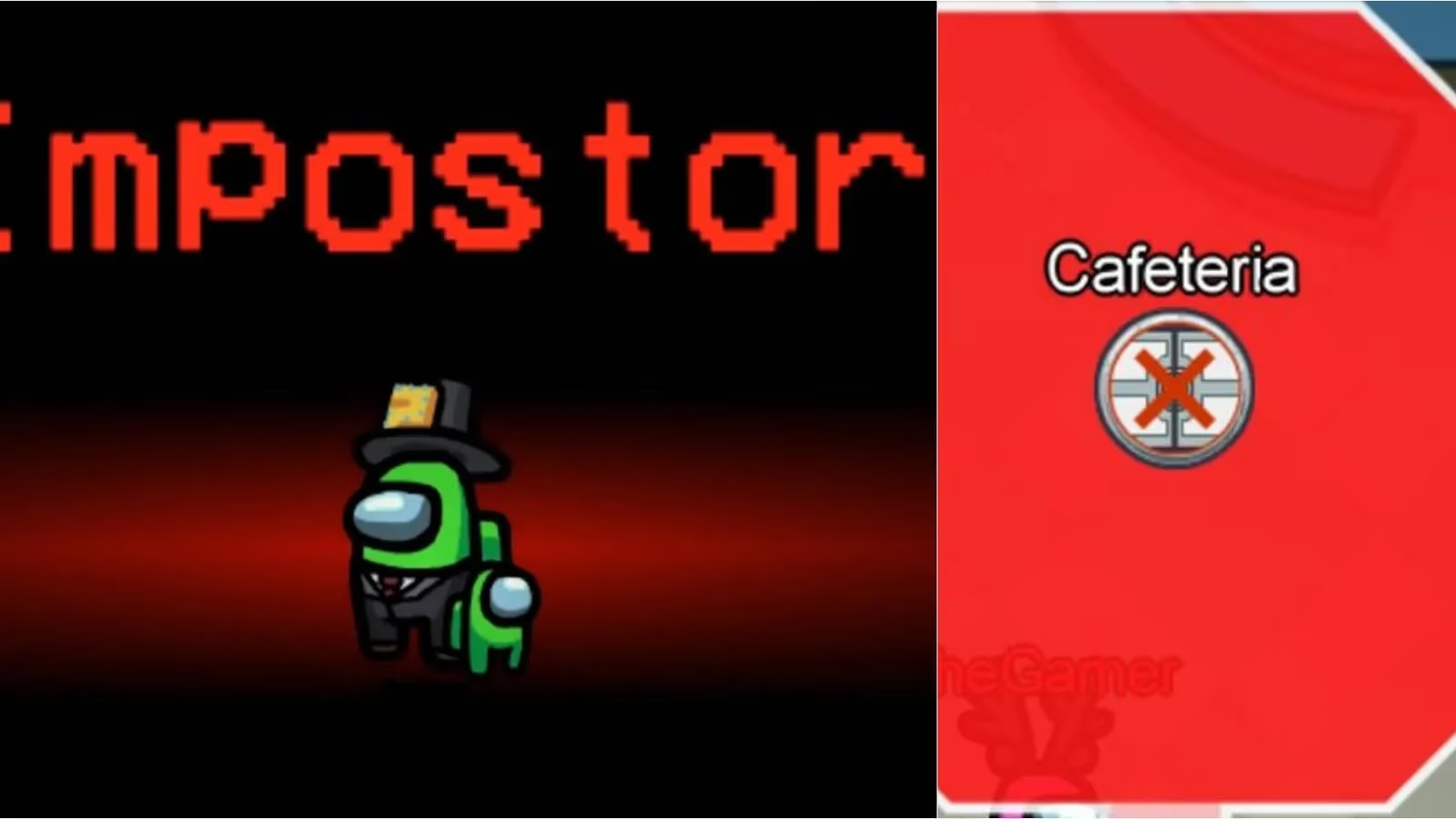
Locking someone in (or out) isn't just rude—it's an art form. As an imposter, you're not merely breaking things; you're conducting a symphony of mistrust, and the door sabotage is your favorite cymbal crash. Imagine the map as a sprawling house party, and you're the tipsy uncle who keeps fiddling with the thermostat. Only instead of making it too cold, you're cutting off escape routes, turning simple corridors into velvet-rope nightmares. The beauty is that it's available on only a handful of maps: The Skeld, Polus, and The Airship. So if you're planning a career as a conniving interior designer, make sure you're not stuck on MIRA HQ—there, the only thing you can close is the emergency meeting, and that's not nearly as fun.
The Door Whisperer's Toolkit
To embrace your inner doorman, look to the bottom right of your screen. That red button, pulsing like the heart of a guilty conscience, is your gateway to mayhem. Click it, and a map unfolds—less a treasure map, more a menu of mischief. Among the symbols, you'll spot little door icons slashed with a cross, as if the game is graphically telling you, "This way to inconvenience!" Not every room can be sealed; the devs, in their wisdom, prevented us from turning the cafeteria into a morgue every single round. Usually, the options include strategic chokepoints: electrical on Skeld, specimen room on Polus, or the elegant yet deadly hallway doors on Airship. Choose wisely, because once you lock a door, you've started a covert countdown in everyone's brain.
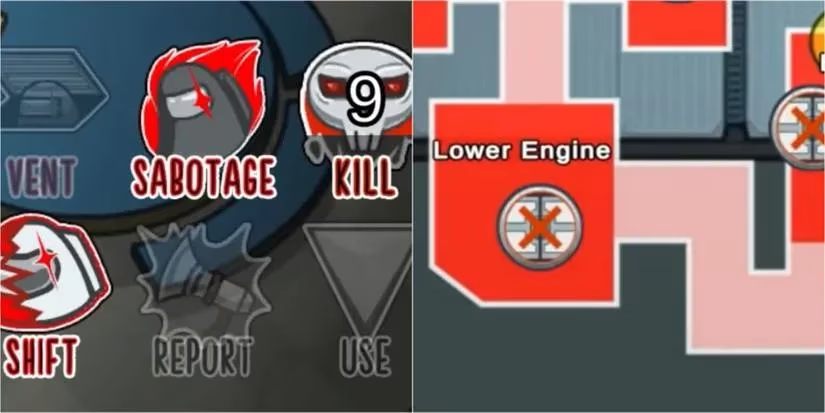
I like to think of each closed door as a temporary cyst on the map's circulatory system. Blood stops flowing, and the crewmates become frantic white blood cells trying to find a way through. The sabotage doesn't last forever—unless you're playing Skeld, where waiting is all you can do. The timer feels like an eternity when you're the one trapped, and like a snap of the fingers when you're the one doing the trapping. Mastering this skill can elevate you from a mere backstabber to a psychological warfare specialist. Just the sound of a door slamming can make a crewmate doubt if they should ever trust a corridor again.
Existential Crisis: How to Open These Blasted Things
Inevitably, karma catches up, and you'll find yourself on the receiving end of a slammed portal. Your first instinct might be to scream into the void, but there's actually a varied menu of solutions depending on where you're stranded. It's like being handed a different set of keys for every building in a cursed apartment complex.
The Skeld teaches patience, the hard way. You stand there, staring at the gate like a cat denied entrance to a bedroom. There's no button to mash, no minigame to conquer. You just wait, hearing the ventilation hum and your own paranoid thoughts. It's the closest Among Us comes to a Zen meditation session, only with more murder.
Polus, the frozen outpost, is slightly kinder. Approach the offending door and hit the 'use' button to summon a tiny panel of switches. The minigame resembles a bomb-defusal scene from a low-budget spy film, except instead of cutting wires, you're flipping switches to realign the door's brain. It's a satisfying tactile experience—like resetting a tripped circuit breaker while a colleague screams about freezing temperatures behind you.
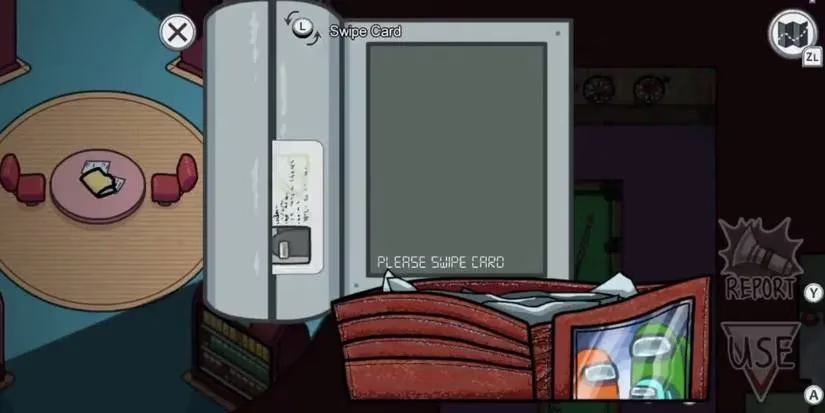
The Airship flips the script entirely. Here, you swipe a card. Not like the Skeld's notoriously finicky card reader in admin—no, this swipe is mercifully gentle, almost forgiving. It's as if the door is saying, "I know you're busy being chased, let's skip the calibration dramatics." One smooth motion and the door hisses open, like a high-end supermarket entrance responding to your noble presence. Thank goodness, because the Airship is already confusing enough without fighting a piece of plastic.
Why This All Matters
You might wonder, after eight years of this game, why doors still hold such psychological power? Because they're not barriers; they're narrative devices. A closed door tells a story: someone just escaped, or someone just got cornered. It silences the sprint sound and replaces it with the loudest noise in the room—uncertainty. Whether you're the one locking or the one swiping a card, you're participating in a tiny theater piece where the curtains drop at the worst possible moment. So next time you slip on the imposter's visor, remember: you're not just sabotaging a mechanism. You're a doorman to despair, and the only tip you need is the one you get from listening to the sweet, muffled cursing on the other side.