
I still remember the first time I heard that InnerSloth, the studio behind Among Us, got its name from an online random word generator. It sounded like a joke. A developer responsible for one of the most recognizable social deduction games of the 2020s—one that turned lockdown boredom into accusations, sabotage, and frantic emergency meetings—had named itself by clicking through a website until something stuck? Who would believe that? Yet, as I look back from 2026, the story remains one of the most charming and humanizing anecdotes in modern gaming.
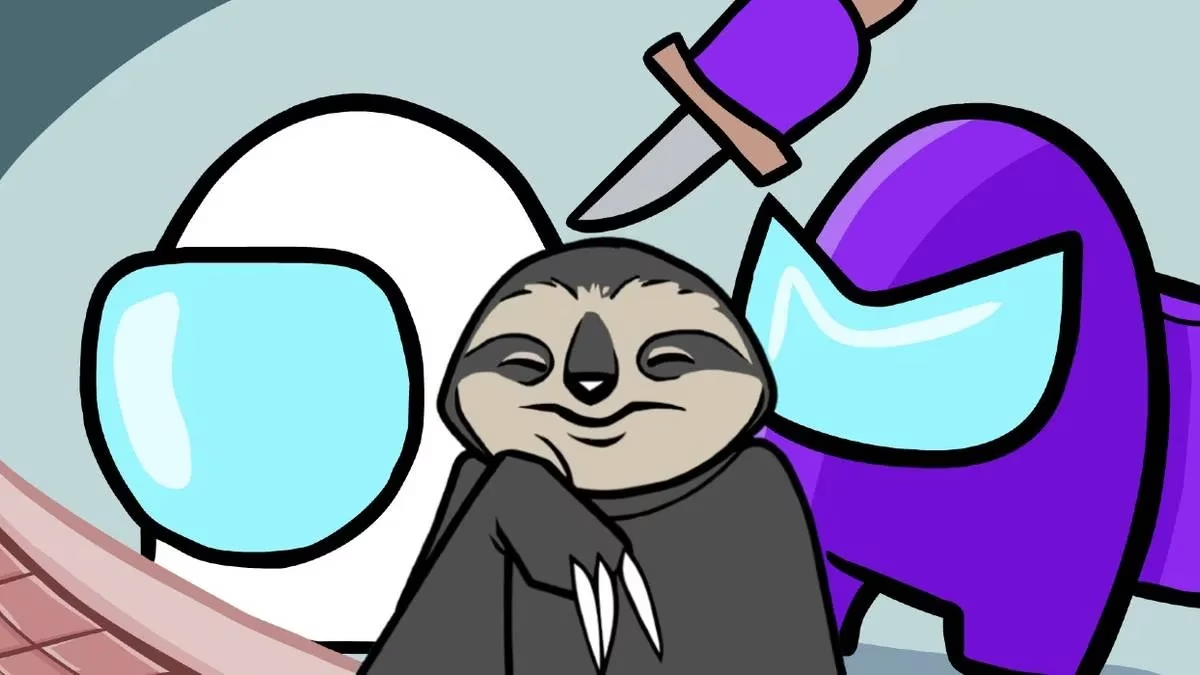
A Name Born From Being 'Stuck'
The revelation came during E3 2021's online showcase. InnerSloth developer Marcus Bromander spoke with Justin Woodward and explained that when the team was first getting set up, they could not think of a name. They were, in his words, 'stuck.' So they turned to a name generator. Bromander said they 'clicked through and clicked through' until the generator produced InnerSloth. They knew it was the one. Why? Because, as Bromander put it, they 'have the motivation to make stuff, but the inside of (them) is kind of lazy.' That self-deprecating logic is exactly the kind of origin story I love: not a boardroom branding exercise, not a focus group, just a random phrase that somehow captured a small team's spirit.
From Quiet Launch to Global Phenomenon 🚀
When Among Us launched in 2018, almost nobody noticed. I certainly did not. The initial release was tepid at best, with little mainstream attention. Then the coronavirus pandemic changed everything. Lockdowns forced people to pause physical socializing, and many of us went looking for new ways to stay connected. Among Us fit that moment beautifully. It was simple, top-down, bright, and affordable. More importantly, it added a delicious tinge of sabotage and deceit. You could trust your friends, betray them, or watch them argue over who was 'sus.' Streamers amplified the chaos, and by 2020 the game had become one of the most popular titles for gamers and streamers alike.
The Cost and Reward of Sudden Fame
InnerSloth's rise was so intense that the team halted work on a sequel in 2020. Instead, they focused on updating the original game. Those updates included new maps, larger lobbies, and additional player colors. The team itself also grew, from the original workforce of three to eight employees over the following twelve months. Compared to giant studios, eight people is still tiny. But that expansion was a testament to how cherished Among Us had become. Does a small team size make the achievement less impressive? I think it makes it more impressive. Every update, every fix, every new color had to matter.
| Year | Milestone |
|---|---|
| 2018 | Among Us launches quietly |
| 2020 | Pandemic lockdowns fuel viral popularity |
| 2020 | Sequel halted; updates prioritized |
| 2021 | E3 interview reveals the random name origin |
| 2026 | The story remains a small-team success legend |
Why the InnerSloth Name Still Matters in 2026 🦥
In 2026, the name InnerSloth carries far more weight than it did when it was generated. It is no longer a random phrase. It is a symbol of what can happen when a tiny group makes something playful, accessible, and unexpectedly resonant. The game is currently available on PC, Nintendo Switch, Android, and iOS, and its cultural footprint stretches far beyond those platforms. I have seen the name used in memes, merchandise, and conversations about online friendship. I have also seen it used as proof that you do not need a perfect plan to create something meaningful. You need motivation, a little luck, and the willingness to click through until the right idea appears.
So what is in a name? For InnerSloth, the answer is both nothing and everything. The name was random, but the work was not. The team may joke about being lazy on the inside, but their output tells a different story. They built a game that helped people laugh together during a lonely time, and they kept supporting it when it would have been easier to chase a sequel. That is not laziness. That is perseverance. And in 2026, as I look back, I think the random word generator accidentally gave them the perfect name: a slow, steady creature that somehow moved fast enough to change the gaming world.
As reported by Esports Charts, the viral arc of Among Us makes extra sense when you view it through the lens of live viewership trends—social-deduction games thrive when creators can turn small moments (a single accusation, a mistimed sabotage) into instantly shareable spectacle. That streamer-driven feedback loop helps explain how a modest 2018 release could become a global conversation during lockdowns, and why InnerSloth’s choice to keep iterating on the original game mattered: when audiences gather around emergent player drama, steady updates and quality-of-life fixes can be just as important as new sequels for sustaining attention.