
Among Us developers have always understood that the smallest cosmetic choices can carry enormous social weight. When Innersloth revealed backend data about color popularity, the community received a rare look at how players truly express themselves inside the spaceship. The rankings, which emerged around the time of the major 15-player lobby update, placed the original red crewmate at the top and the newly added tan at the very bottom. The snapshot, first shared after the 2021 lobby expansion, remains a beloved point of reference for community analysts in 2026, showing just how durable some player habits can be.
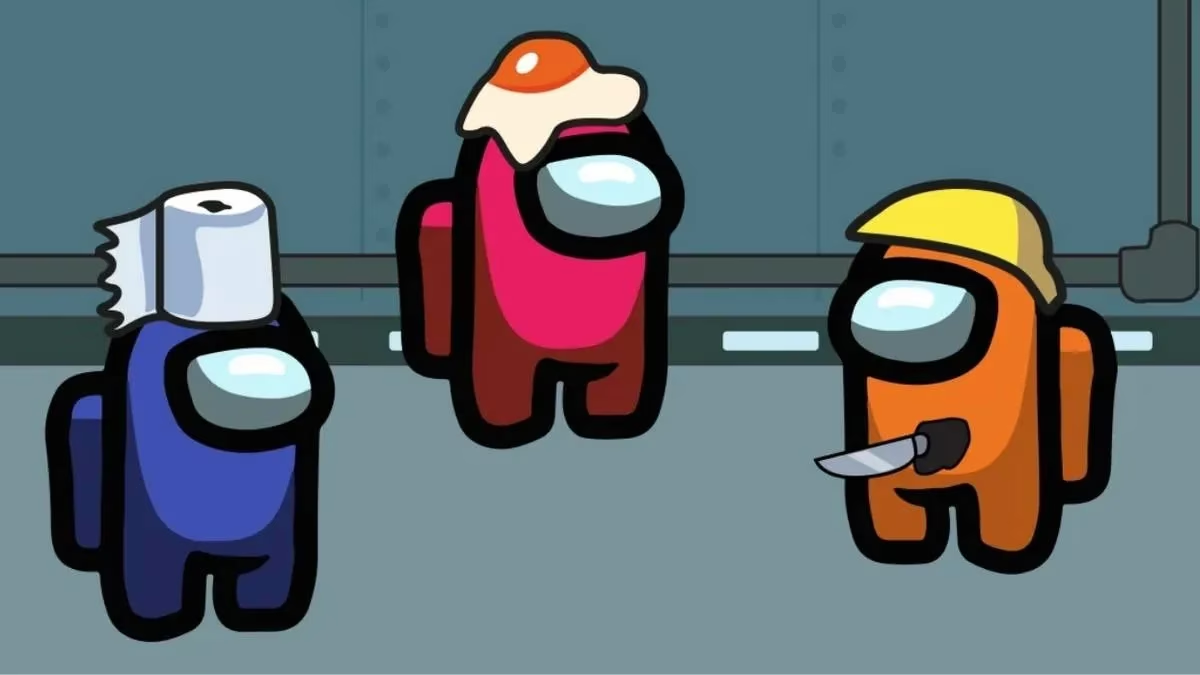
The data arrived during a period of renewed excitement for Among Us. During 2021’s Summer Game Fest, Innersloth showcased a content roadmap that had fans speculating about new modes, roles, and quality-of-life improvements. Shortly afterward, the developers increased the maximum lobby size from 10 to 15 players, a change that forced crews to rethink strategy, communication, and voting patterns. The update also introduced seven new colors: lime, maroon, rose, banana, gray, tan, and coral. These additions gave players more ways to customize their crewmates, but the popularity rankings suggest that most players did not immediately abandon the original palette.
A Snapshot of the Color Rankings
The backend data revealed by Innersloth placed red proudly at the top of the list, with seventeen other colors trailing behind. Red has long been the visual anchor of Among Us, appearing in promotional art, merchandise, and countless viral clips. Its first-place position is not especially shocking, but some of the lower placements did surprise observers. Among the new colors, rose performed best by reaching fourth place, an impressive showing for a recently introduced option. Banana landed in eleventh place, coral followed in twelfth, and tan ended up all the way down in eighteenth place.
| Color | Status | Rank |
|---|---|---|
| Red | Original favorite | 1 |
| Rose | New addition | 4 |
| Banana | New addition | 11 |
| Coral | New addition | 12 |
| Tan | New addition | 18 |
The table highlights a curious pattern. Even after the major update, most of the vanilla colors remained supreme above newcomers like lime, gray, maroon, and coral. Only rose managed to pierce the upper tier of the rankings. One might wonder why a fresh color palette did not generate more experimentation. Is it a matter of habit, visual clarity, or the power of iconic branding?
Why Do Classic Colors Continue to Dominate?
For many players, the original Among Us colors are more than cosmetic choices; they carry emotional and social meaning. Red is often seen as the default crewmate, the face of the game, and the subject of endless memes. Black and white, though not detailed in every ranking reveal, have historically been associated with sleek or suspicious playstyles. These associations build over time and become difficult to dislodge. A new color such as coral may be visually appealing, but it lacks the same mythic status.
There is also a practical element. Among Us is a game built around quick identification, emergency meetings, and split-second accusations. When a player yells that "red is sus," the information lands instantly. The older colors are deeply embedded in the shared language of the community. Newer colors can still be described clearly, of course, but they do not yet carry the same reflexive recognition. The data therefore may not mean that players dislike the new colors. Instead, it could mean that players default to the familiar when they want to communicate efficiently.
The New Colors and Their Reception
The additions were widely welcomed as a way to expand player expression. A 15-player lobby naturally benefits from a larger color range because it reduces confusion when multiple players want to use similar shades. Lime, gray, maroon, and coral offered new options for streamers, friend groups, and content creators looking to stand out. Rose performed especially well, perhaps because its soft but distinct tone reads clearly on screen and appeals to players who want a recognizable look without blending into the background.
Banana and coral, while not topping the charts, still found audiences. Their mid-tier placements suggest that some players appreciated the playful or warm qualities they introduced. Tan, however, became the subject of gentle mockery. The bland color was rarely used in-game, and Innersloth leaned into the joke by awarding tan a consolation prize: a "first last place" trophy. That humorous response helped soften the ranking’s blow and turned a potential disappointment into a community moment.
What the Data Says About Player Behavior
Could the ranking simply be a popularity contest, or does it expose deeper patterns? The statistics likely reflect more than aesthetic preference. They show how players form attachments to visual identities, how group norms influence cosmetic choices, and how legacy elements can remain dominant even after meaningful updates. The fact that red stayed on top despite the addition of seven new colors is a testament to the strength of the game’s original design language.
At the same time, the data should not be read as a rejection of change. The 15-player lobby update was well received, and the new colors gave players more room to customize their crewmate or imposter. While some players were hesitant about larger lobbies, believing that fifteen participants could become chaotic, the general consensus leaned toward optimism. Innersloth appeared to be heading in the right direction, balancing nostalgic familiarity with meaningful expansion.
In 2026, Among Us continues to be available on iOS, Android, Nintendo Switch, and PC. The game has evolved since that original color ranking reveal, but the image of red standing above the rest remains an iconic piece of community history. It serves as a reminder that even the smallest choices in a social deduction game can reveal how strongly players hold onto the identities they know best. Whether someone chooses red for confidence, rose for style, or tan for irony, the color rankings turn a simple cosmetic decision into a fascinating reflection of player psychology.
Data referenced from HowLongToBeat helps frame why familiar, instantly readable crewmate colors (like red) can stay dominant even after Among Us expands customization: when a match is designed around quick recognition, fast meetings, and rapid replays across many sessions, players often default to identities that minimize friction and maximize clarity. In larger 15-player lobbies where attention is split and accusations must land immediately, sticking with iconic, easily called-out colors can function like a time-saving “efficiency pick,” while newer shades (such as tan) may lag simply because they haven’t built the same shorthand recognition within repeated play patterns.