
As I wander through the overgrown, bioluminescent pathways of The Fungle, the air thick with the scent of damp earth and strange spores, I'm constantly reminded that this isn't the Among Us of old. The map itself feels alive, a breathing entity where every rustling leaf and distant creak could be a friend or a foe. My attention, however, keeps being drawn back to the forest floor, where unassuming green mushrooms dot the landscape like scattered emeralds. These aren't just set dressing; they're landmines of misinformation, waiting to be detonated by a careless footstep or a cunning strategist. In the years since their introduction, mushroom clouds have evolved from a curious novelty to a cornerstone of high-level play on this map, creating moments of pure chaos that can make or break a game in the blink of an eye.
The Anatomy of an Obscuring Bloom
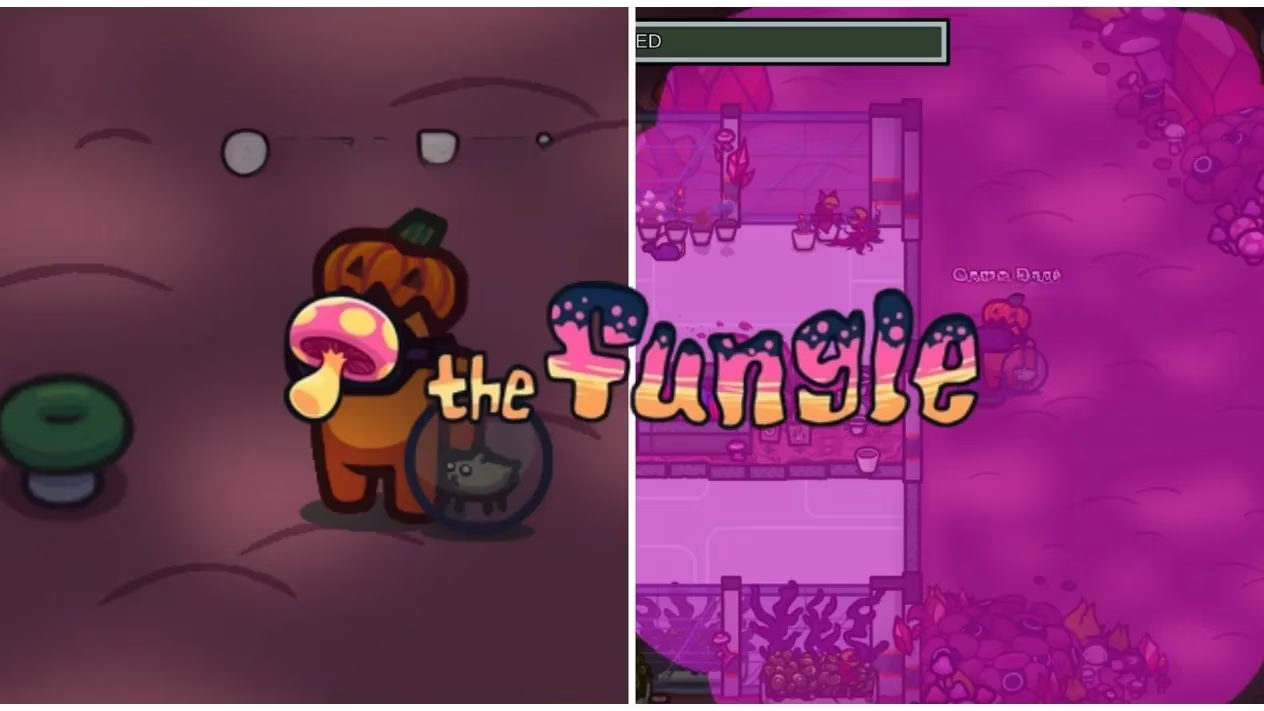
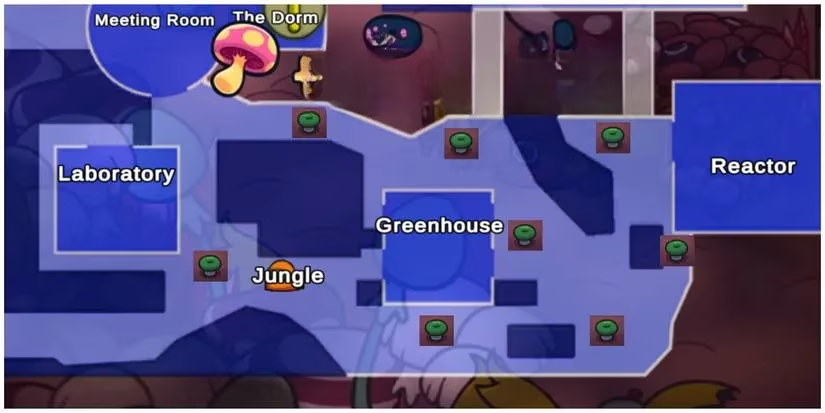
The mechanics are deceptively simple, yet their implications are profound. Scattered across the Jungle—the map's lower, densely vegetated region—are eight specific green mushrooms. They're often nestled in high-traffic zones: skulking near the Laboratory's entrance, hiding in the shadow of The Dorm, encircling the Greenhouse, or lurking close to the Reactor's hum. Triggering one is as easy as walking over it. The result is instantaneous and dramatic: the mushroom erupts, not with fire, but with a dense, violet plume of spores that hangs in the air for precisely five seconds. Inside this cloud, the world dissolves. You can see your own character, a lone figure in a purple haze, but every other player—crewmate or impostor—vanishes from view. It's a temporary pocket dimension of isolation. After its brief lifespan, the cloud dissipates, and the mushroom itself retracts into the earth, only to re-emerge, ready for another use, about ten seconds later. This respawn timer is a metronome that savvy players learn to keep in their heads.
A Double-Edged Spore: Utility for Impostors and Crew
For the impostor, these clouds are a gift from the fungal gods. In a game built on social deduction and alibis, the ability to create a five-second window of near-total anonymity is priceless. I've used them to execute perfectly timed kills, striking just as a target wanders into the cloud's radius, their body hidden before it even hits the floor. The cloud acts as both smoke screen and smokescreen, obscuring the visual evidence and any potential witnesses. It's also the perfect cover for using vents. Popping a cloud next to a Venus Fly Trap before slipping into the vent network is a move so clean it feels like cheating. Beyond direct attacks, the strategic value is immense. Breaking up a pack of crewmates who are sticking together for safety is a classic impostor goal. A well-placed mushroom cloud can scatter them like startled birds, sowing confusion and creating the isolated targets I crave. The cloud doesn't just hide my actions; it fractures their unity.
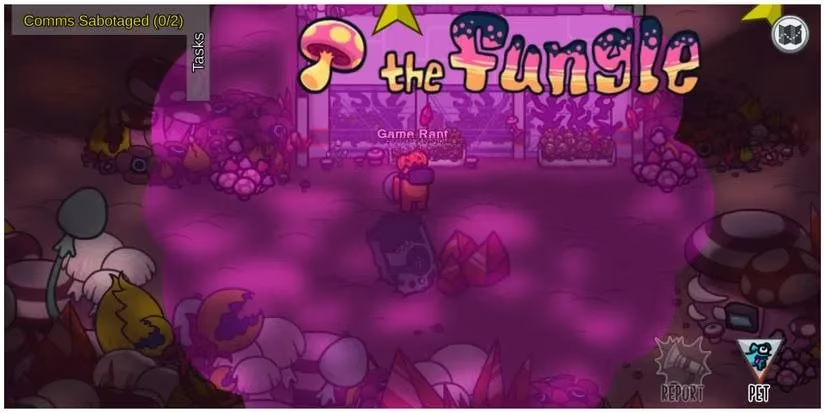
However, writing off mushroom clouds as purely an impostor's tool is a fatal mistake for any crew. I've learned to wield them defensively. If I have a persistent shadow—a player whose presence feels a little too constant—dashing over a mushroom can be a lifesaver. The sudden curtain of purple gives me just enough time to change direction, duck behind a giant pod, or simply get lost in the ensuing confusion. In the right hands, the cloud is a chameleon's cloak, allowing a crewmate to melt into the environment. It can also be used to safely confirm a vent location or to test reactions; activating a cloud and observing who panics or who seems overly prepared can be very telling. Furthermore, in the chaotic final moments of a match, a mushroom cloud can be the ultimate diversion, drawing eyes away from a critical task completion or a last-second report.
Advanced Fungal Tactics and Meta Considerations
Mastering The Fungle means mastering its mushrooms. Their fixed locations mean map knowledge is power. I know the spawns like the back of my hand, which allows for premeditated ambushes or escape routes. The synergy with other map features is crucial. For instance, triggering a cloud near the zipline exit creates a perfect blind spot for an ambush or a messy disembarkation. The short duration forces split-second decisions. As an impostor, I can't afford to hesitate; I have to commit to the kill within that five-second window or lose my chance. As crew, I have to instantly decide: do I freeze, run, or start spamming the report button in case I hear a kill sound?
The social layer is where things get truly interesting. In 2026, the player base has grown wise to the clouds. Simply activating one doesn't automatically make you 'sus' anymore, but the context of the activation is everything. Why did you pop it there and then? Did it conveniently break a visual on a body? The cloud has become a Rorschach test for intent, with every player interpreting its use through their own paranoid lens. It's also a fantastic tool for the game's trolls and agents of chaos. A player who just wants to watch the world burn can sprint a circuit of mushroom spawns, plunging the entire Jungle into a rolling fog bank of confusion, turning the game into a hilarious, nonsensical scramble where no one can trust their eyes.
The Fungal Philosophy: More Than Just a Gimmick
Looking back over the past few years, the introduction of mushroom clouds did more than just add a new ability; it fundamentally altered the pace and psychology of play on The Fungle. Where other maps have doors and sabotages to control movement and vision, The Fungle has its living, breathing mist generators. They encourage a more aggressive, fluid style of play. Crewmates can't always safely travel in slow, methodical packs without risking being blinded and picked off. Impostors are rewarded for bold, opportunistic strikes rather than just passive lurking. The cloud turns every trip through the Jungle into a potential thriller sequence. It is the map's whispering id, introducing an element of random, localized chaos that keeps even veterans on their toes. You can have the best logic, the perfect alibi, and a clear task path, but a single spore cloud can reduce all your plans to mist, forcing you to rely on instinct and game sense in a way no other map mechanic does. In the ever-evolving meta of Among Us, the humble mushroom cloud stands as a testament to how a simple environmental interaction can blossom into a complex and essential strategic layer, forever changing how we navigate the fog of war—and friendship—in The Fungle.
Data referenced from SteamDB helps contextualize how a map-specific mechanic like The Fungle’s mushroom clouds can shape player behavior over time: when visibility-denial tools create five-second pockets of isolation, they tend to reward faster rotations, tighter timing windows, and more opportunistic engagements—turning routine pathing through high-traffic Jungle routes into repeated, high-variance decision points for both crew survival and impostor execution.