
Ever since I wrapped up my fourth playthrough of Vampire: The Masquerade – Swansong in the spring of 2026, I’ve found myself chasing that same high. Big Bad Wolf’s hybrid of supernatural detective fiction and personality-driven roleplaying completely redefined how I think about narrative RPGs. There’s no combat, no chase sequences—just tense conversations, skill checks that feel genuinely consequential, and the constant hum of hidden vampire politics. After the credits rolled, I craved more stories that trusted me to solve mysteries with a character sheet rather than a sword. That search led me through a variety of titles, some that mirror Swansong’s exact mechanics and others that simply nail that brooding, blood-soaked atmosphere. Here are the games I’ve been obsessing over lately.
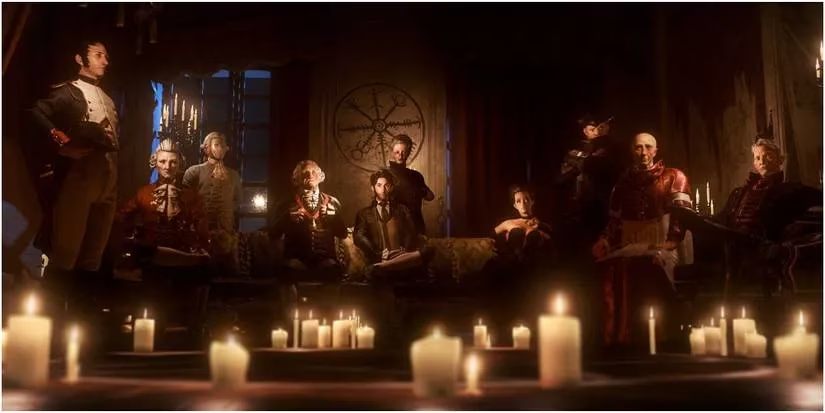
🧩 The Council (2018) – The Narrative Blueprint I Almost Missed
Before Swansong, Big Bad Wolf cut their teeth on The Council, and playing it after Swansong felt like uncovering an origin story. Set on a remote island in 1793, it throws you into a secret society’s political web, where every revelation reshapes how characters treat you. What makes it eerily similar is the character progression: I poured points into Detective and Psychology, and entire dialogue trees opened up that were completely invisible during my second run with a more diplomatic build. The social combat—where you verbally spar using effort points—is a prototype of Swansong’s Confrontation system, and the way your personality traits lock or unlock clues feels almost identical. If you loved roleplaying a Toreador who talks their way out of everything, The Council is essential homework.
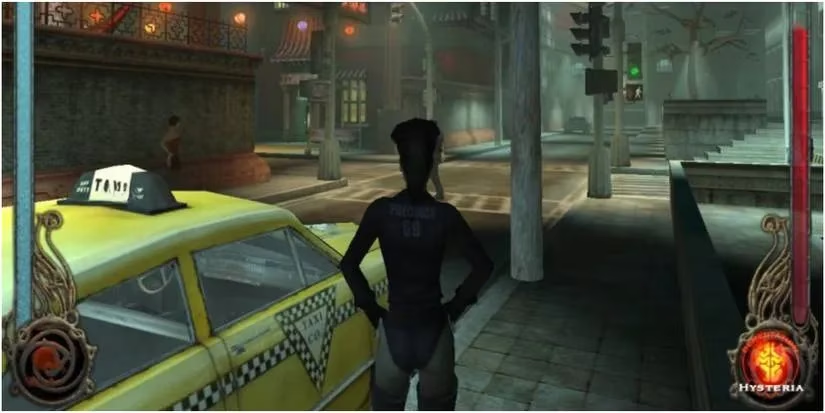
🩸 Vampire: The Masquerade – Bloodlines (2004) – Revisiting the Clan Classics
Even in 2026, the original Bloodlines holds up as the definitive World of Darkness video game experience—as long as you install the fan patch. I went back to it after Swansong craving a deeper dive into Kindred lore, and it delivered a version of LA that feels both grimy and seductive. Unlike Swansong’s dialogue-focused approach, this one has real combat, but what kept me hooked was the faction reputation system. My Malkavian run left me locked out of certain quests simply because I sounded too insane; my Ventrue playthrough bought me respect but also suspicion from the Anarchs. That same interplay of image manipulation and hidden weakness runs straight through Swansong’s Boston. The long-delayed sequel Bloodlines 2 remains frustratingly absent, but the first game is still a masterclass in clan politics.
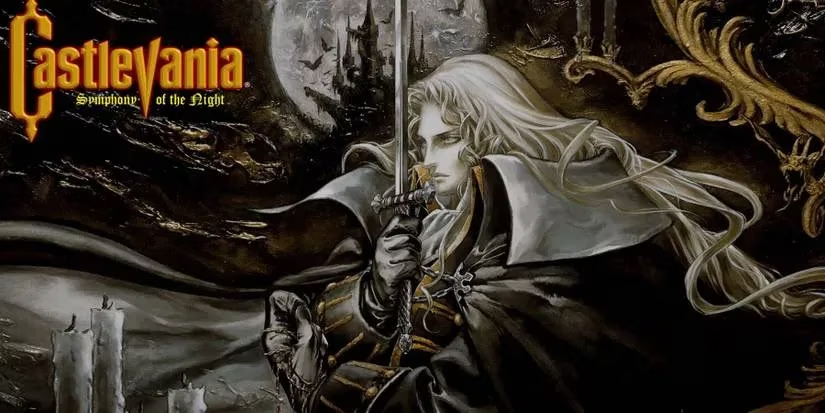
🦇 Castlevania: Symphony of the Night (1997) – A Gothic Glow-Up That Never Ages
Sometimes I just need to immerse myself in a vampire universe that leans hard into its own mythology, and no series does that better than Castlevania. Symphony of the Night might look nothing like Swansong—it’s a side-scrolling action RPG—but the way it layers equipment, spells, and secrets into a labyrinthine castle captures the same sense of discovery. When I first played the inverted castle twist years ago, I felt that same shock I got from Swansong’s late-game betrayals. It’s also a masterclass in character transformation: Alucard’s vampire abilities evolve in ways that feel personal, and you can build him as a spellcaster, a brute, or something in between. The pixel art is timeless, and the soundtrack still haunts me.
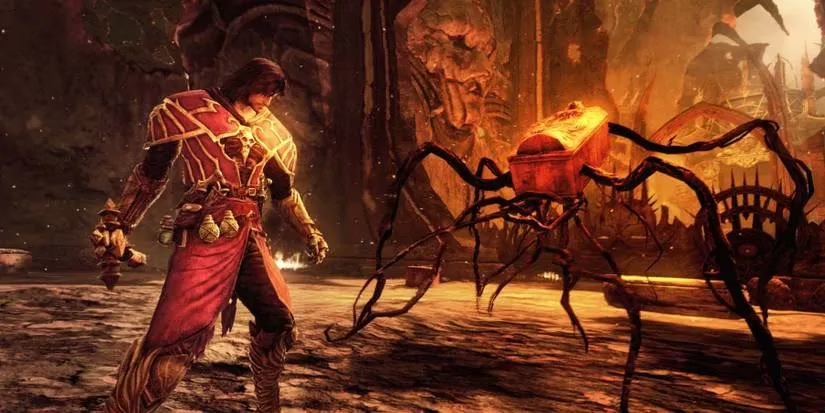
⚔️ Castlevania: Lords of Shadow (2010) – Bombastic Epic Meets Bite
For a more modern, cinematic take on the vampire myth, I replayed Lords of Shadow. It’s almost the polar opposite of Swansong in terms of gameplay—combat is fast, brutal, and feels like a mix of God of War and Devil May Cry—but the narrative ambition is what drew me back. The voice cast alone (Robert Carlyle, Patrick Stewart, Natasha McElhone) elevates every cutscene, and the story of Gabriel Belmont’s descent into darkness is a slow, tragic unraveling that reminded me of Swansong’s more melodramatic character arcs. It still carries that Metroidvania DNA, with abilities gating progress, but the laser focus on personal tragedy makes it a touching vampire drama.
🔎 The Wolf Among Us (2013) – Detective Work Where Every Choice Bleeds
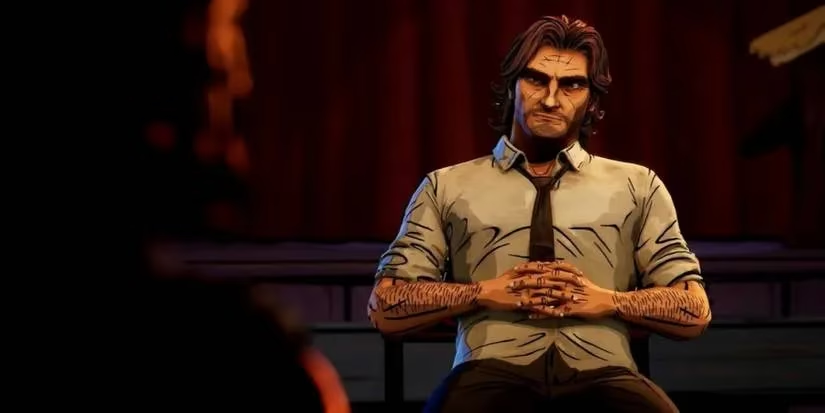
If you strip Swansong of its RPG layers, what remains is a supernatural detective game driven entirely by branching dialogue and investigation—and that’s exactly what Telltale’s The Wolf Among Us delivers. I replayed it last month as Sheriff Bigby Wolf, and the fable-noir atmosphere of Fabletown still gives me chills. Every conversation forces you to decide how much of the beast to reveal: do you scare a witness into talking or reason with them like a tired cop? The way the story shifts based on those decisions mirrors Swansong’s fluid narrative, and both games share a grim, adult tone where fairytale creatures are just as broken as any Camarilla elder. The sequel recently came out, but the original’s tight, five-episode arc remains my go-to.
🗝️ Blood Omen: Legacy of Kain (1996) – Where My Vampire Obsession First Bit
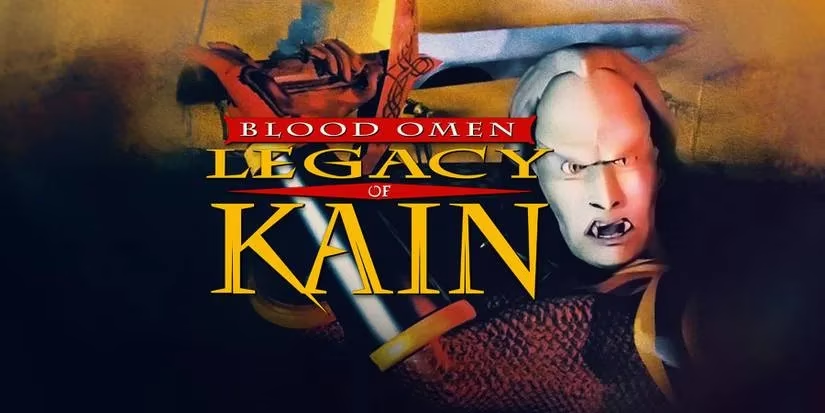
There’s a reason I keep this top-down RPG installed on my phone. Blood Omen is one of the earliest games to make me truly feel like a vampire—not just a hero with long teeth. Kain’s journey to murder the Circle of Nine is told through Shakespearean voice acting and a world that actively punishes you for ignoring your thirst. Like Swansong, it’s all about the burden of being a night creature: I’d find myself drained of blood in a boss fight, frantically slaughtering villagers just to survive, and the narrative never let me forget that moral cost. Its blend of action and puzzle-solving is primitive by today’s standards, but the storytelling absolutely paved the way for modern vampire RPGs.
🎭 Vampyr (2018) – Morality, Medicine, and the Hunger Inside
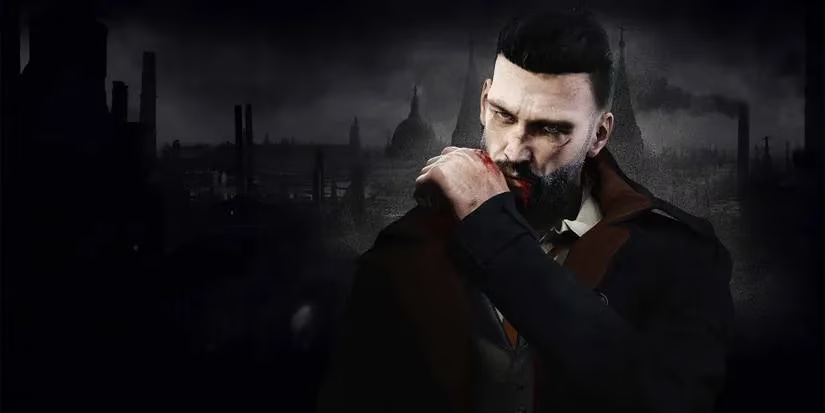
Dontnod’s Vampyr might be the closest relative to Swansong in terms of atmosphere and consequence. Set during the 1918 Spanish flu pandemic, Dr. Jonathan Reid walks a tightrope between healer and predator. I experimented with an “ethical” playthrough where I refused to feed on civilians, and I ended up so underpowered that every skirmish was a desperate gamble—exactly the kind of resource scarcity Swansong invokes with Willpower. The real magic happens in the dialogue system, where learning a character’s fears and history can let you mesmerize them, drain them, or spare them. Entire districts collapse if you’re careless. Swansong’s endings change drastically based on who you preserve or sacrifice, and Vampyr evokes that same aching responsibility.
In 2026, we’re blessed with a library of narrative-heavy RPGs and vampire sagas that all feel like cousins under the skin. Whether I’m debating diplomats on a windy island, clawing through a castle of horrors, or sitting across from a frightened fable in a neon-lit office, these games keep that same candle burning. Swansong opened a very specific door for me, and behind it I found a whole corridor of darkness I never want to leave.