
Back in 2020, the world was stuck indoors, and a tiny spaceship full of colorful beans became an unexpected lifeline for millions. Flash forward to 2026, and the 'killing game' wave shows no sign of crashing. From Battle Royale to Squid Game, audiences can’t get enough of contests where trust is currency and betrayal is only a vote away. But the undisputed monarch of this kingdom is still Among Us, a game so simple it feels like it was sketched on a napkin — yet its cultural gravity has been so strong that the entire genre now orbits around it, like moths around a porch light.
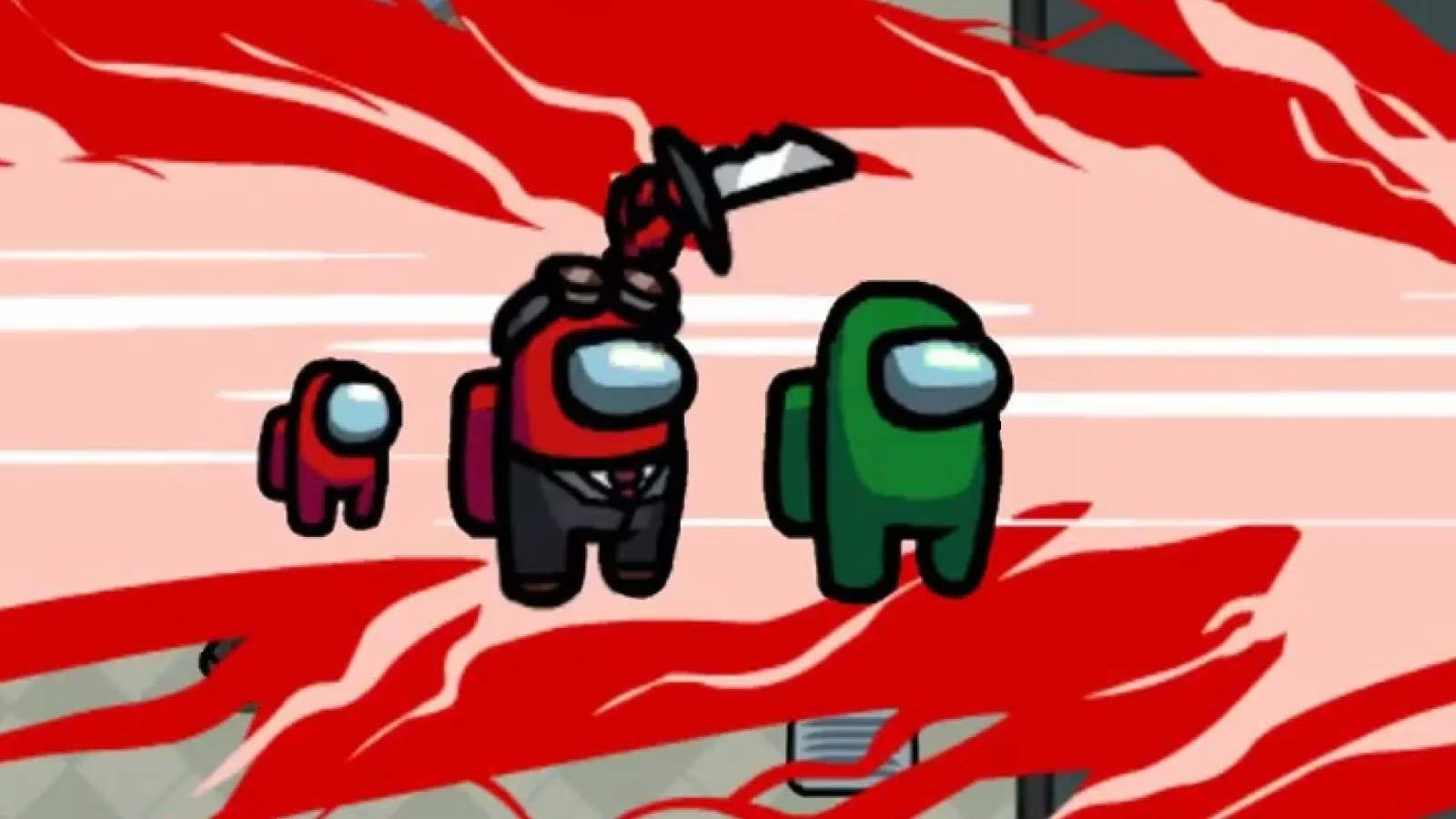
The Little Bean That Could: A Crash Course in Accidental Genius
Initially dropped in 2018, Among Us barely registered on anyone’s radar. It wasn’t until the pandemic forced everyone into their homes that its true genius ignited. The premise was absurdly minimal: a handful of crewmates race to complete mundane tasks while one or two impostors sabotage and murder. No complex lore, no triple‑A graphics — just a palette of pastel astronauts and a chat box full of accusations.
But that’s precisely where the magic brewed. The game’s simplicity was its superpower. Unlike older social deduction games like Werewolf or Mafia, which rely heavily on verbal role‑play, Among Us glued players to tangible objectives. You weren’t just talking; you were scanning your boarding pass, diverting power, or frantically downloading data. The impostor had to fake these actions, turning every movement into a tell. This blend of physical tasks and psychological warfare was like a crocodile blending with a log — you never knew when the log would bite.
After 2020, the community built a unique lexicon. Words like “sus,” “vent,” and “self‑report” escaped the game and oozed into everyday internet vernacular. The devs at Innersloth responded with updates: new roles like Scientist and Shapeshifter, fresher maps like The Airship, and eventually Among Us VR in late 2022, which plopped players directly into Skeld’s claustrophobic corridors. By 2026, the VR version has become a staple of virtual get‑togethers, proving that the formula isn’t just sticky — it’s modular.
The Shape of the Void: How Among Us Became the Blueprint
When a game becomes a phenomenon, it inevitably becomes the template. Developers watching from the sidelines saw the success and thought, “Let’s do that, but with a twist.” The problem? Most twists are just new hats on the same corpse.
Take Town of Salem, a social deduction veteran that predates Among Us by four years. In 2022 it birthed Traitors in Salem, a spin‑off that transposed the original’s role‑based court into a real‑time, task‑driven town. Players ran around clicking on objects, reporting bodies, and voting out evildoers. It was Town of Salem dressed in an Among Us costume, and the community noticed. The game didn’t flop outright, but it never escaped the “clone” label. It felt like a dog chasing a car — once it caught it, it had no idea what to do next.
The bigger fear for 2026 is a genre flooded by identikit impostor‑hunters. A few have tried: Goose Goose Duck distinguished itself with built‑in voice chat and a massive roster of roles, while Dread Hunger cast survival and betrayal on a frozen sea. Yet neither ignited the same mainstream wildfire. Why? Because they all wrestle with the shadow of the original. Audiences now expect quirky avatars, task‑based gameplay, and the iconic emergency meeting button. Stray too far and you lose the casual crowd; stick too close and you’re just another “sus” clone.
This situation is akin to a plague of mimic octopi — each trying to impersonate the same dangerous creature, but the imitation only works if the predator hasn’t already seen the real thing. Once Among Us planted its flag, every subsequent attempt to copy its exact shape just looks like a pale imitation.
Breaking Free: Why Innovators Must Unplug from the Skeld
Social deduction isn’t a monolith; it’s a spectrum. Among Us sits at one end with its tactile tasks and bright visuals. Yet the original spark came from tabletop games like Avalon and Secret Hitler, which rely solely on conversation. The genre’s future lies in remembering those roots — and stretching them in new directions.
Developers should be spelunking into question: What if your tasks weren’t repetitive mini‑games but narrative choices that changed the story? What if the map wasn’t a static spaceship but a procedurally generated mansion with environmental clues? What if players couldn’t speak at all, relying only on emotes and body language? The tools are there: 2026’s AI‑driven voice filters, VR body tracking, and even haptic feedback could turn a simple betrayal into a full‑body experience.
The message to aspiring creators is clear: Use Among Us as a compass, not a cage. Study why its mixture of objective‑based gameplay and social psychology worked — not just to clone it, but to stand on its shoulders and see further. If the market drowns in mediocre copycats, the entire genre risks the fate of battle royale’s early over‑saturation, where fatigue killed dozens of decent games before they could find their footing.
The Eternal Meeting
Nearly eight years after its quiet launch, Among Us remains a cultural touchstone. It’s available everywhere now: mobile, PC, all major consoles, and of course the VR headsets that have grown from a niche gadget into a living‑room staple. Innersloth continues to drip‑feed content, but the game’s real legacy is how it democratized lying to your friends.
As we sail further into the 2020s, the killing game genre will keep mutating. But for it to thrive, the next success story needs to be a game that someone describes not with “It’s like Among Us but…” but with “I’ve never played anything like this before.” The emergency meeting is open — let’s hope someone brings a truly new idea to the table. 🚀🕵️