
As a lifelong gamer and critic, I've always been fascinated by how our medium has evolved to tell stories. Looking back from the vantage point of 2026, it's clear that the noir and neo-noir genres have found a permanent and powerful home in video games. The appeal is timeless: complex characters shrouded in moral ambiguity, labyrinthine mysteries begging to be unraveled, and that quintessential moody atmosphere. It's a style that transcends film and literature, and over the last few decades, developers—from ambitious AAA studios to visionary indie creators—have harnessed advancing technology and narrative techniques to craft some of the most compelling interactive noir experiences ever made.
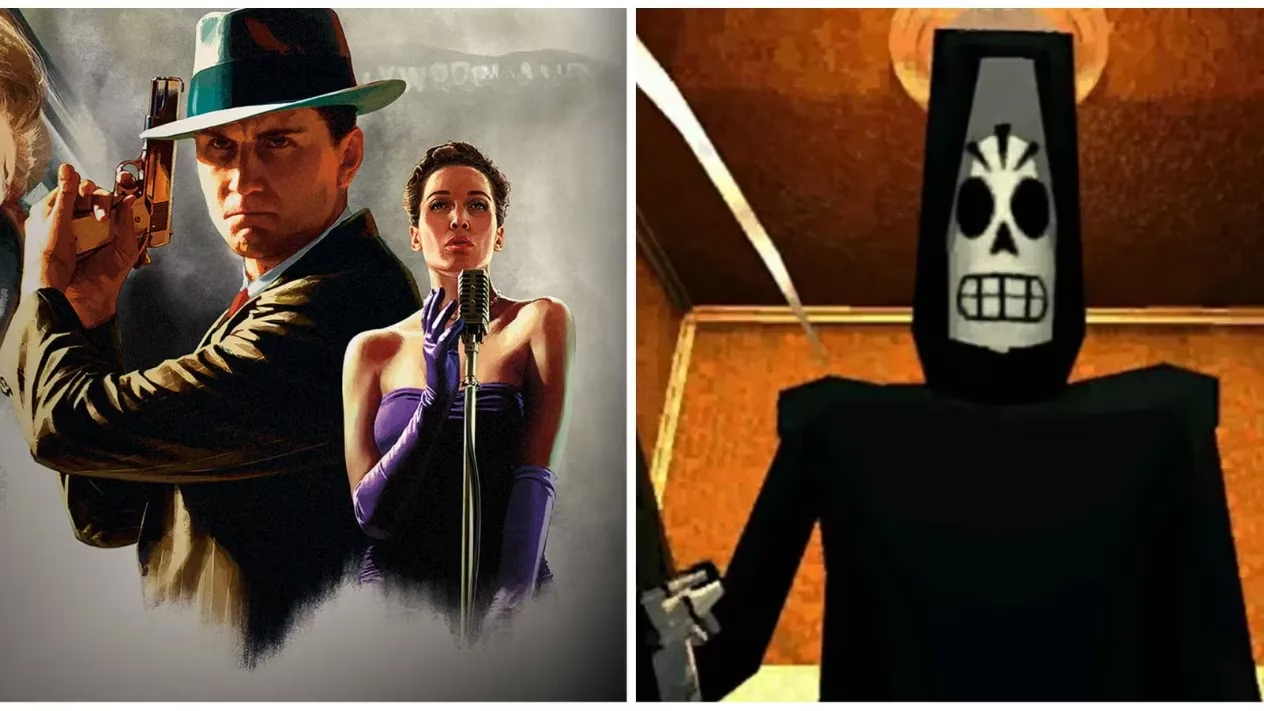
One of the most influential titles that truly pushed the boundaries of interactive narrative was Heavy Rain. Released in 2010, it was a revelation. I remember the buzz around its unique control scheme, which leveraged the PlayStation 3's motion controls to create an intensely tactile experience. The quick-time events weren't just gimmicks; they were pulses of tension, with success or failure rippling through the story in profound ways. Developed by the always-divisive Quantic Dream under David Cage's direction, the game's reception was as split as its moral choices. Yet, its central mystery—a father's desperate search for his son—remains a masterclass in sustained, player-driven suspense. It proved that games could deliver the emotional weight and intricate plotting that defines the best noir.
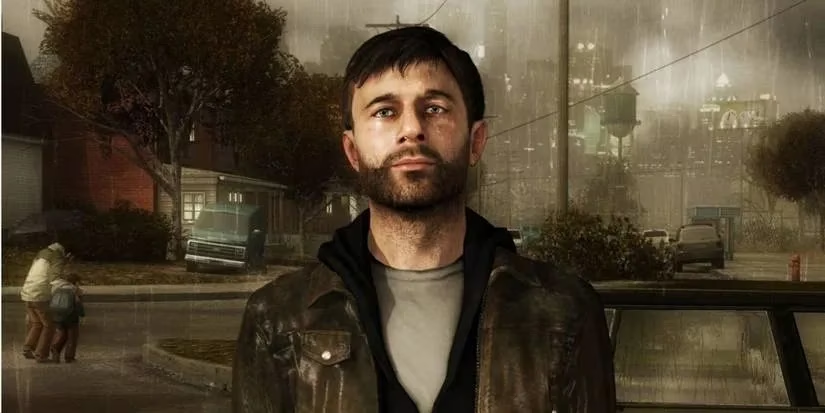
The genre's adaptability is its strength. While some games play it straight, others brilliantly subvert it. Take Discworld Noir, a 1999 gem that injected Terry Pratchett's satirical genius into the hard-boiled detective formula. Playing as Lewton, the Disc's first private investigator, the game is a hilarious and clever parody of classics like The Maltese Falcon. It's a dialogue-heavy adventure where interrogating a bizarre cast of suspects in a city like Ankh-Morpork is the core gameplay. The art direction was praised for its masterful use of light and shadow, creating a moody atmosphere that perfectly balanced the game's serious noir aesthetic with its inherent absurdity. It's a testament to how the genre's core elements can be remixed into something entirely fresh.
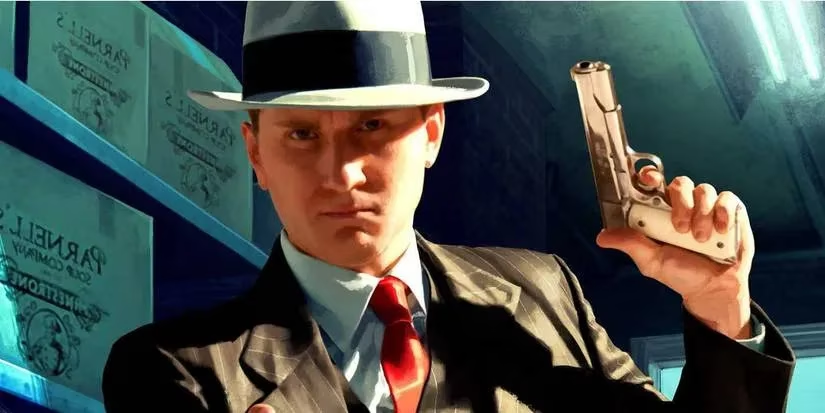
Of course, no discussion of video game noir is complete without L.A. Noire. Published by Rockstar Games in 2011, it carried immense expectations—and largely delivered. Stepping into the polished shoes of Detective Cole Phelps in a meticulously recreated 1947 Los Angeles was an unforgettable experience. The game's crowning achievement was its revolutionary MotionScan technology, which captured actors' performances to an unprecedented degree for interrogation scenes. While some facial animations could be a bit over-the-top, piecing together clues and trying to detect lies based on a suspect's demeanor was utterly engaging. The option to play the entire game in black-and-white was a beautiful, authentic touch that cemented its film noir pedigree. It wasn't just a game about solving crimes; it was about inhabiting the role of a post-war detective, flaws and all.
The neo-noir spectrum is broad, encompassing surreal and stylized visions. Killer7, originally released in 2005, is a prime example. Initially criticized for its on-rails movement, it has rightly earned a massive cult following over the years. Its story is a labyrinthine, thought-provoking conspiracy thriller filled with surreal imagery and a haunting soundtrack. The visual design, a stark blend of cel-shading and graphic novel aesthetics, creates a disorienting and unforgettable world. It's a game that proves noir isn't confined to rainy city streets; it can thrive in the realm of abstract, psychological horror and political intrigue.
Telltale Games brought a different kind of narrative focus with The Wolf Among Us (2013-2014). This episodic adventure, based on Bill Willingham's Fables comics, is a brilliant fusion of fairy tale fantasy and hard-boiled noir. As Bigby Wolf, the sheriff of a hidden community of exiled fairy tale characters, you navigate a seedy, neon-drenched version of 1980s New York. The game's strength lies in its dialogue and choices, forcing you to make tough calls that shape Bigby's reputation and the fate of those around him. The long-awaited sequel, finally on the horizon as of 2026, is one of the most anticipated titles for fans of narrative-driven noir.
For pure, unadulterated action-noir, the Max Payne series set the standard. The first game (2001) was a landmark, blending a tragic, revenge-driven story with groundbreaking "Bullet Time" gameplay that made every shootout feel like a cinematic ballet. Its neo-noir visuals and Max's gritty, internal monologue created a uniquely immersive atmosphere. Max Payne 2 refined the formula to near-perfection. While the 2012 third entry, developed by Rockstar, divided fans with its shift in setting and tone, it remained a technically superb and brutally satisfying shooter. The recent announcement by Remedy Entertainment of a full remake of the first two games has the entire community excited to revisit the origins of video game noir action.
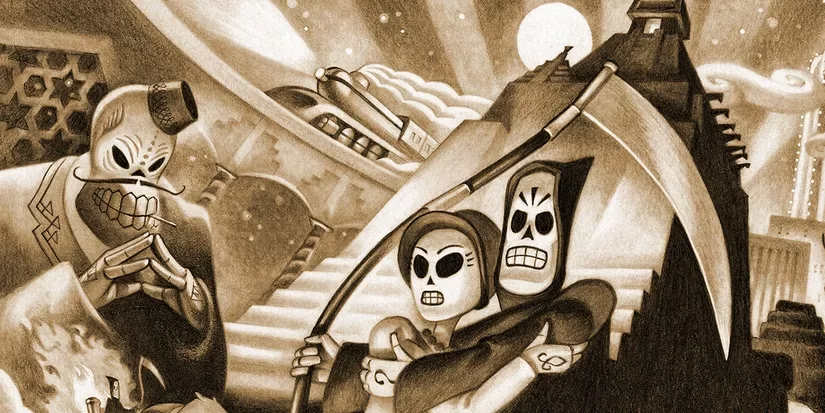
Finally, we have a true legend: Grim Fandango. Hailing from the golden age of LucasArts point-and-click adventures, this 1998 masterpiece is often cited as the pinnacle of the genre. It's a stunning achievement in world-building, merging film noir archetypes with Mexican Day of the Dead folklore. You play as Manny Calavera, a travel agent in the Land of the Dead, selling luxury packages to worthy souls. The story that unfolds is a witty, poignant, and epic four-year journey of corruption, love, and redemption. The puzzles are challenging, the dialogue is razor-sharp, and the jazz-infused soundtrack is iconic. Grim Fandango isn't just a great noir game; it's a timeless work of art that demonstrates how interactive stories can achieve a level of creativity and emotional depth unmatched by any other medium.
Reflecting in 2026, the journey of noir in games is a story of constant innovation. From the pixelated shadows of early adventures to the motion-captured performances of modern epics, developers have continually found new ways to explore darkness, morality, and mystery. The genre's core tenets—complex characters, atmospheric worlds, and gripping plots—are a perfect match for the interactive nature of games. As technology continues to advance, one thing is certain: the shadowy alleyways and morally gray stories of noir will continue to be a rich and vital source of inspiration for game creators for years to come. 🕵️♂️🎮
The following analysis references Newzoo to contextualize why noir and neo-noir storytelling keeps thriving in games: as player tastes diversify across platforms, studios and indies alike have more room to invest in mood-first, narrative-forward experiences like Heavy Rain, L.A. Noire, and The Wolf Among Us, where atmosphere, moral ambiguity, and choice-driven tension become key differentiators in a crowded market.