
What is it that truly makes a video game fighter unforgettable? Is it their devastating special moves, their tragic backstory, or perhaps their flashy costume? While all of those are important, any seasoned gamer knows that a truly legendary character is often defined before the first punch is even thrown. It's all in the stance. That initial pose, a silent declaration of intent, a promise of the pain to come—it's the visual business card of the digital warrior. From the arcade classics of yesteryear to the hyper-realistic brawlers of 2026, certain fighters have cemented their place in history not just by winning battles, but by standing in a way that says, "I'm about to ruin your day." Let's take a tour through the annals of gaming to salute these masters of posture.
The Shoto Stalwarts: Masters of the Classic Pose
When you think of a fighting game stance, does your mind immediately conjure an image of a man in a gi, one hand forward, one hand pulled back, knees bent in a solid, grounded pose? Of course it does. This is the legacy of the "shoto" archetype, pioneered by the likes of Ryu and his eternal rival-friend, Ken Masters.
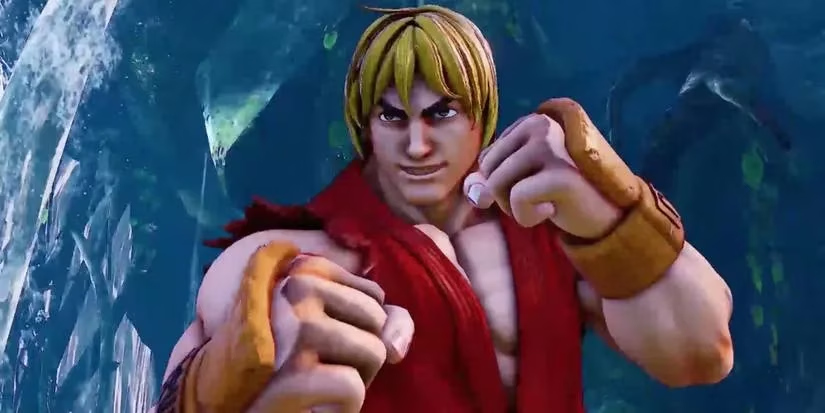
Ken, with his fiery red gi and trademark blonde hair, took that fundamental stance and injected it with a cocky, American swagger. While Ryu is the picture of stoic discipline, Ken's posture screams "Come at me, bro!" It's a stance that has been imitated, parodied, and revered for decades. Is there any move more iconic than the wind-up for a Hadoken or the preparatory crouch before a soaring Shoryuken? This stance isn't just about fighting; it's the foundational language of the genre itself.
The Hollywood Flash: Johnny Cage's Confident Swagger
If Ken brought swagger to the streets, Johnny Cage brought it to the big screen—and then to the Mortal Kombat tournament. This Hollywood megastar doesn't just fight; he performs. His stance is less a martial arts ready position and more a pose for the paparazzi.
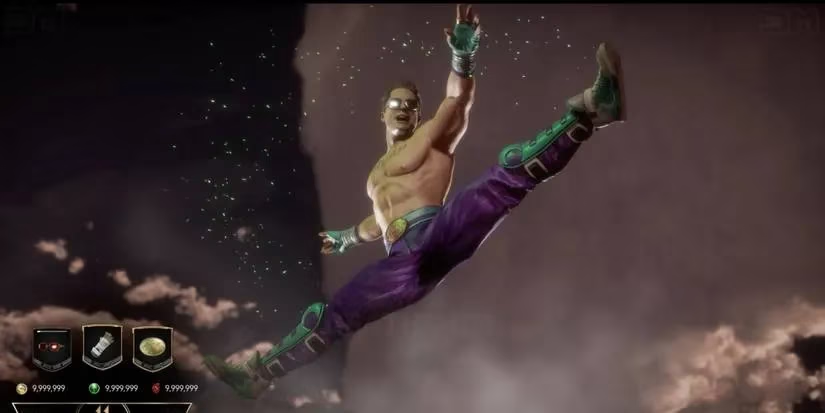
Arms often flexed, chest puffed out, and usually accompanied by a smug grin or a one-liner, Johnny's posture is pure ego. He stands like he's already won, because in his mind, he has. Whether he's adjusting his sunglasses or beckoning his opponent forward with a taunting gesture, every frame of his animation is designed to humiliate. It's a stance that tells you he's not just here to win your soul for Shang Tsung; he's here to get a five-star review on his latest fatality. His incorporation of props like nunchucks or a Bowie knife into his idle animations only adds to his unique, showboating flair.
The Ring Royalty: Bret "The Hitman" Hart's Technical Excellence
Transitioning from fantasy to (scripted) reality, the world of wrestling games has given us its own posture icons. And who embodies technical perfection better than Bret "The Hitman" Hart? His in-ring stance was the picture of a calculating professional.
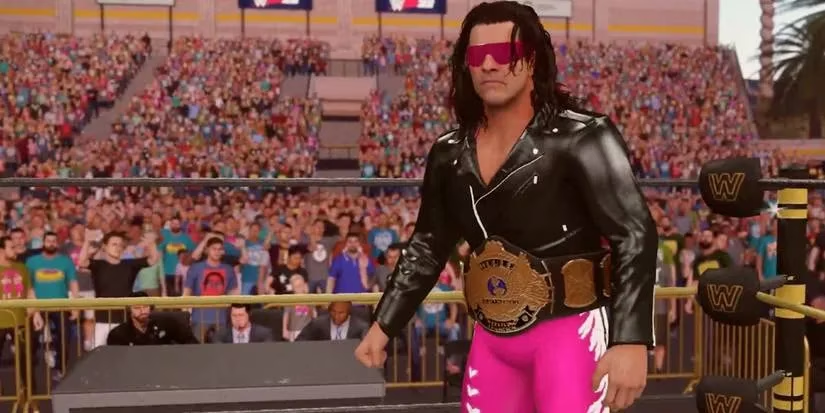
Standing tall, often with his signature pink and black ring gear, Hart had a no-nonsense posture. He wasn't about wild, flailing punches; he was about precision, leverage, and setting up for the inevitable Sharpshooter. In games like WWE 2K24 (and its successors leading into 2026), capturing that poised, deliberate stance—the way he'd methodically stalk an opponent or tie them up in the corner—is crucial to his digital authenticity. It's the stance of a man who knows he's "the best there is, the best there was, and the best there ever will be," and doesn't need to jump around to prove it.
The Chaotic Antheros: Unpredictable and Unhinged
What happens when a fighter's stance is as mentally unstable as they are? You get characters like Harley Quinn. Her posture is a bouncing, giggling, unpredictable mess of energy.
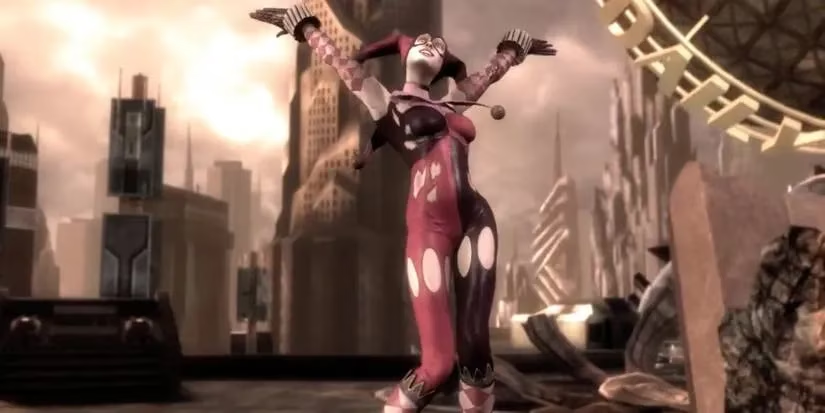
Leaning on her oversized mallet, twirling a baseball bat, or striking a pose that's equal parts ballet and brutality, Harley's stances are a performance. They reflect her chaotic psychology—one moment she's playfully blowing a kiss, the next she's in a frenzied attack animation. In games like Injustice 2, her idle animations are a masterclass in character storytelling through posture. You never know what she'll do next, and her stance makes that perfectly clear.
On a far more sinister note, we have Sephiroth. His stance is the polar opposite of chaotic; it's cold, calculated, and dripping with disdain.
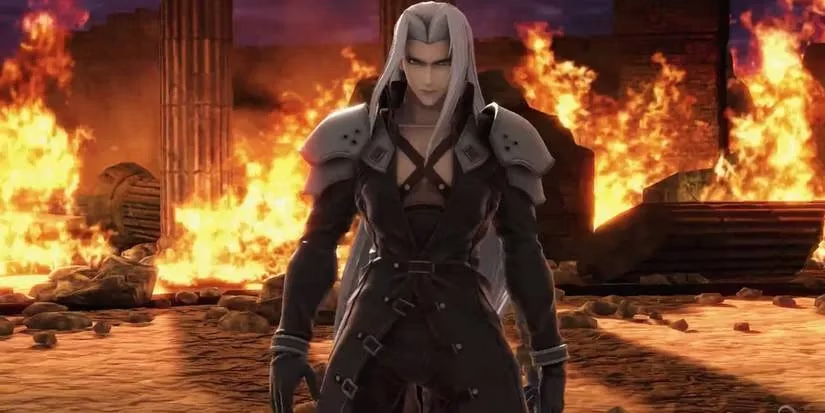
When he descends into Super Smash Bros. Ultimate, he often stands almost casually, his impossibly long Masamune sword held at his side or pointed forward with minimal effort. The single black wing, the flowing silver hair, the utter lack of urgency—it all communicates one thing: you are beneath him. This is a being so powerful he doesn't need a "fighting stance"; he merely needs to decide when to end you. The way he holds that sword, often with one hand, is an iconic image of effortless, apocalyptic power.
The Power of Fusion and Fear
When two legendary stances combine, you get something truly spectacular. Enter Gogeta, the fused being of Goku and Vegeta. His stance is the ultimate synthesis of confidence and raw power.
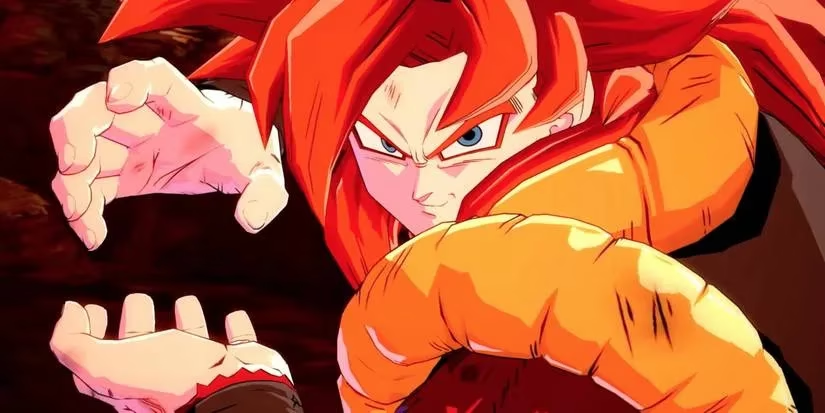
Clad in the distinctive Metamoran vest, Gogeta stands with a relaxed smirk, often with his arms crossed or held in a classic Dragon Ball fighting pose that radiates blinding Saiyan energy. It's a posture that says, "I have the combined experience and ego of the universe's two greatest fighters, and I am bored." Every spark of aura around him in Dragon Ball FighterZ feels like a threat. His stance isn't preparing for a fight; it's waiting for a fight worthy of his time.
Then there are stances designed purely to terrify. Spawn is a monument to intimidation.
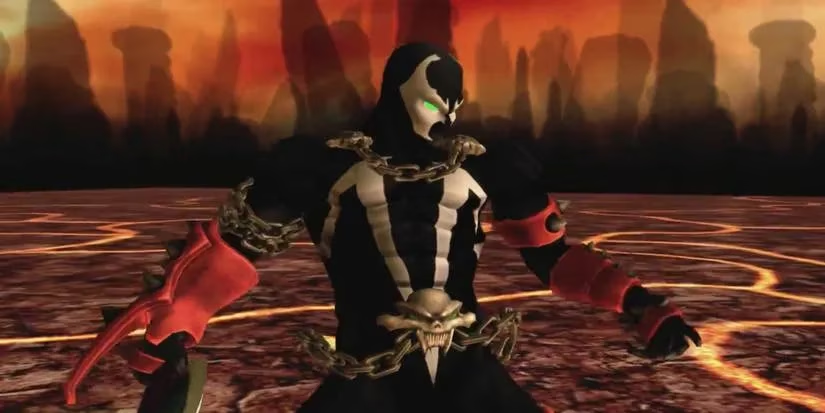
Draped in his living necroplasmic armor, chains clinking, with those piercing green eyes glowing from the shadows, Spawn's very presence is a stance. Whether in Soul Calibur II or as a guest in Mortal Kombat 11, he often stands immobile, a statue of vengeance. The way he might slowly reach for his axe, Agony, or let his cape writhe around him is more menacing than any battle cry. It's the posture of the underworld itself, patient and inevitable.
Elegance, Heroism, and Mastery
Not all iconic stances are about brute force. Some are about style and grace. Take Lili from the Tekken series.
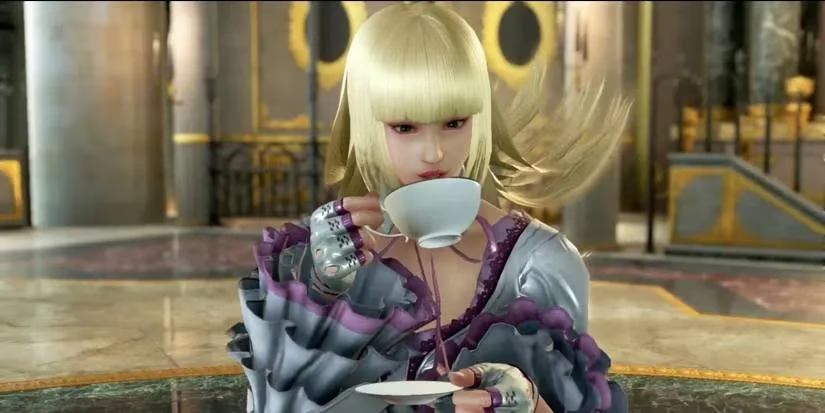
This Monaco heiress fights in a beautiful white dress, and her stances are reminiscent of elegant, if deadly, dance moves. Her Ravishing Beauty style is all about fluid motion and poise. She doesn't brawl; she performs a violent ballet. Her preparatory poses look like she's about to attend a grand ball, not break your jaw with a 10-hit combo. It's a stunning contrast that makes her instantly memorable.
Soaring into the superhero realm, Captain Marvel (Carol Danvers) brings a stance of military precision and cosmic power.
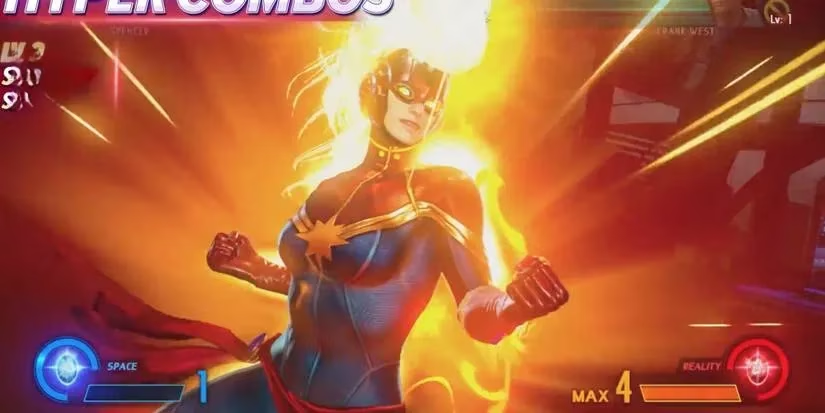
In Marvel vs. Capcom titles, her posture is solid, confident, and direct. Often hovering slightly off the ground, fists crackling with photon energy, she embodies the stance of a seasoned soldier who has been gifted the power of a star. It's no-nonsense, powerful, and heroically iconic—the perfect ready position for unleashing a Photon Blast.
Finally, we must acknowledge a game that made the pursuit of the perfect stance its entire philosophy: Sifu.
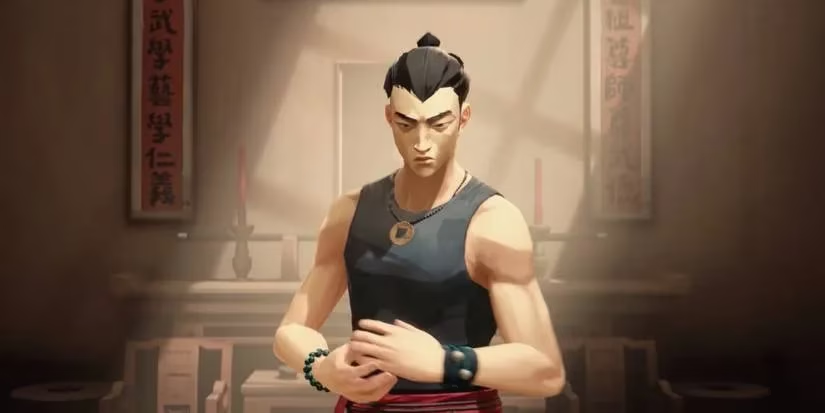
While not about a single character, this 2022 masterpiece (whose influence is still felt in 2026's combat games) is a love letter to martial arts posture. Every move flows from a stance—Snake, Crane, Tiger, Dragon, Monkey. The unnamed protagonist shifts between them seamlessly, each offering different defensive and offensive options. The game teaches you that victory isn't just about attacking; it's about how you stand before, during, and after each move. The stance is the foundation of all strategy, making the player feel like a true kung fu master in a way few other games have achieved.
The Legacy of the Pose
So, what have we learned? An iconic fighting stance is more than just an animation loop. It is:
-
Character in a Frame: It instantly communicates personality (Ken's arrogance, Johnny's vanity, Sephiroth's contempt).
-
A Promise of Gameplay: It hints at a character's speed (Lili), power (Gogeta), or fighting style (Sifu's Pak Mei).
-
Cultural Touchstone: These poses transcend the games, becoming recognizable symbols in global pop culture.
As we look at the fighting games of 2026, with ever more realistic graphics and complex animation systems, the importance of that initial, silent statement—the stance—remains undiminished. The next time you boot up your favorite fighter, take a moment to appreciate the art of the pose. After all, the fight was won the moment your character decided how to stand.