
It’s 2026, and with the long-awaited second season of The Wolf Among Us finally regaining momentum, I’ve been diving back into the original 2013 season like an old detective reopening a cold case. Every time I roam those smoky streets as Bigby Wolf, I’m reminded that the real magic of Telltale’s fable-noir isn’t just the plot twists—it’s the way the smallest conversation can spiral into a moral whirlpool. I’ve played through the season more times than I can count, and yet some choices still feel like trying to catch smoke with a butterfly net: no matter how carefully you reach, the outcome slips through in unexpected ways.
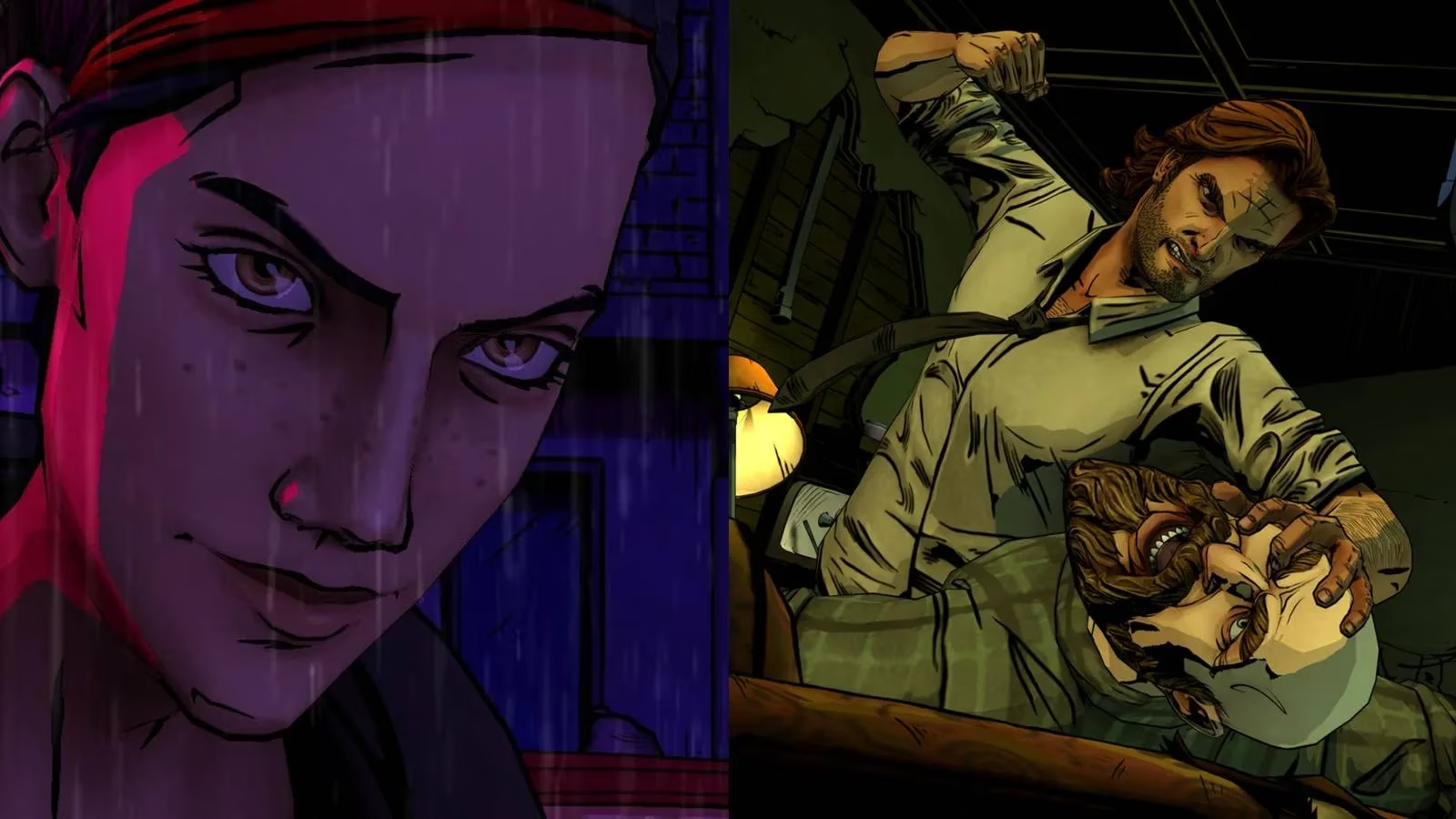
In this article, I want to walk you through the decisions that stuck to my ribs like burnt coffee—ranked from the ones that merely prick your conscience to the ones that fundamentally reshape how Fabletown sees you. No need to tiptoe around spoilers; we’re deep in the woods now.
6. Telling Beast About Beauty (Episode 1)
This choice is the narrative equivalent of opening a window during a thunderstorm: you don’t know if you’re letting in fresh air or a lightning bolt. When I first stumbled upon Beauty sneaking away from the struggling motel and Beast’s barely contained rage, my gut screamed “protect her.” Every instinct built by a lifetime of fairy tales told me Beast was the monster. But the game gives you this delicate little lever—you can lie to Beast, again and again, about what you saw. It’s not story-altering in the grand scheme (the couple sorts out their trust issues regardless), yet I agonized over it as if I were holding a fractured mirror. Do you fuel a husband’s paranoia to maybe save a woman you barely know? Or do you stay out of it and let the relationship bleed quietly?
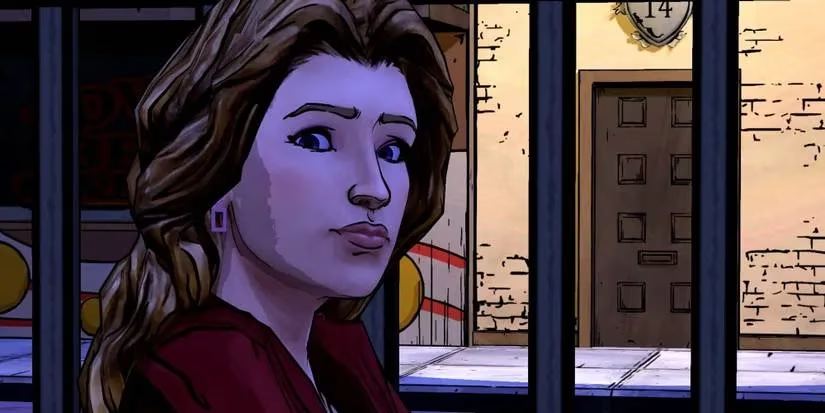
📊 The outcomes are more about who you become than what happens. Tell Beast, and he morphs into a jealous, wounded animal. Stay silent, and you carry the uncomfortable weight of a secret that isn’t yours. This is the game teaching you that sometimes the hardest test is one that has no bearing on the final grade—it only shows you what kind of person is holding the controller.
5. Choosing Toad or Prince Lawrence First (Episode 1)
Here’s a classic Telltale pressure cooker: two crises, one sheriff, and a ticking clock that you can’t see but you can feel. Toad calls in a panic, clearly in a domestic squabble, while your investigation pulls you toward Prince Lawrence’s apartment. On my first run, I bolted to Toad’s without a second thought. Surely a living, yelling problem is more urgent than a lead that can wait. That’s the trap—this game plays you like a fiddle if you’re not careful. Toad’s emergency, it turns out, has already evaporated by the time you arrive, leaving you with nothing but awkward small talk. Meanwhile, Prince Lawrence’s life hangs by a thread you can actually snip or save depending on when you show up.
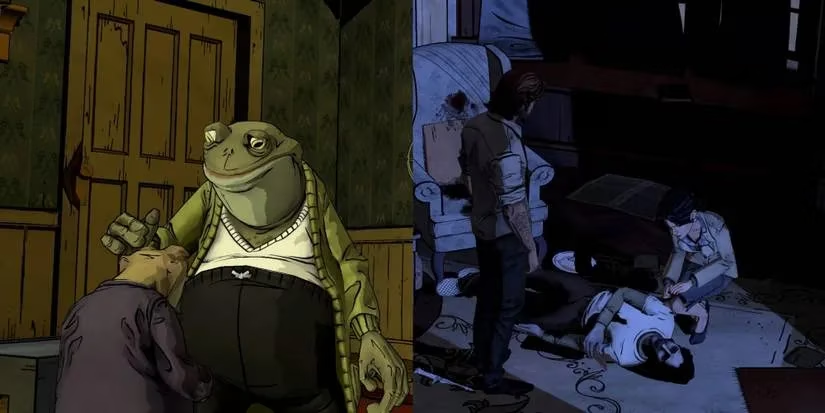
📊 If you go to Prince Lawrence first, he survives and appears in later scenes, changing the texture of the narrative. Head to Toad first, and Lawrence won’t make it—a quiet death that’s easy to miss but impossible to forget once you know. This decision felt like being asked to defuse two bombs with one pair of wire cutters, with the timer hidden inside someone else’s pocket.
4. Burning Aunty Greenleaf’s Magic Tree (Episode 3)
Now we’re getting into ethical quicksand. The magic tree grown by Aunty Greenleaf provides cheap, illegal glamours—the magical disguises that keep non-human Fables from causing a panic. From the law’s perspective, it’s contraband. Snow White, ever the bureaucrat, insists you torch it. But the tree is also a lifeline for the poorest residents of Fabletown, a sort of underground oxygen tank for those who can’t afford the legal route. Standing in that dim apartment, I felt like a doctor holding a match over a patient’s ventilator, arguing with a clipboard about regulations.
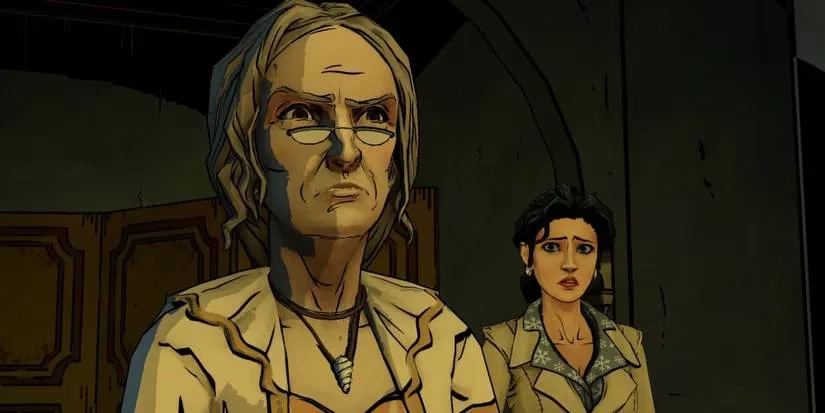
📊 Burning the tree erases a crucial black-market supply; offering Greenleaf a job or leaving her alone lets the illegal glamours continue flowing. The main plot chugs along unaffected, but your relationship with the struggling fables of Fabletown shifts. This is a decision about whether you serve the law or the people the law is supposed to protect, and the game never gives you a clean answer.
3. Sending Colin to the Farm (Episodes 1 & 5)
Colin is that friend who crashes on your couch, drinks your last beer, and makes you laugh even when you’re angry. He’s also a pig who refuses to buy a glamour—a clear violation of Fabletown rules. The first time Bigby has to decide whether to enforce the law on his best (and arguably only) pal, the choice lands like a punch to the sternum. The Farm isn’t just a rural retreat; it’s a surreal prison where intelligent magical creatures are forced to live among ordinary, mindless animals. Imagine being a poet suddenly condemned to spend eternity in a stable of livestock that will never understand a sonnet.
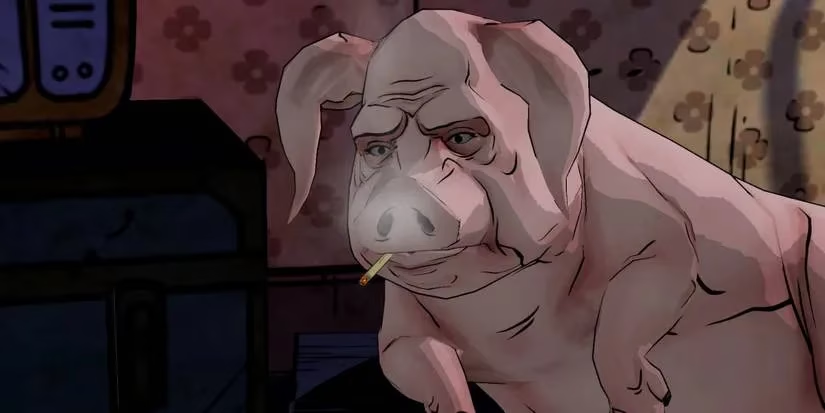
📊 The decision is planted in Episode 1 but only blooms in the finale, when you see the transport leave. Send Colin to the Farm, and you gain a reputation as a by-the-book enforcer, but the personal cost is a cold emptiness in Bigby’s apartment. Let him stay, and you bend the law for friendship, betting that mercy won’t come back to bite. I’ve done both, and neither path ever felt victorious.
2. Sending Toad and TJ to the Farm (Episodes 4 & 5)
If Colin’s departure stings, then this choice pours salt into the wound. Toad is abrasive, his parenting is shoddy at best, and he’s been hiding his son TJ without a glamour. But he’s also a single father scraping by in a world that couldn’t care less. When the authority to send them both to the Farm sat in my hands, I saw it as a threadbare blanket being ripped away on the coldest night of the year. TJ has already witnessed violence and instability; adding exile to the mix feels like punishing the lamb for the shepherd’s mistakes.
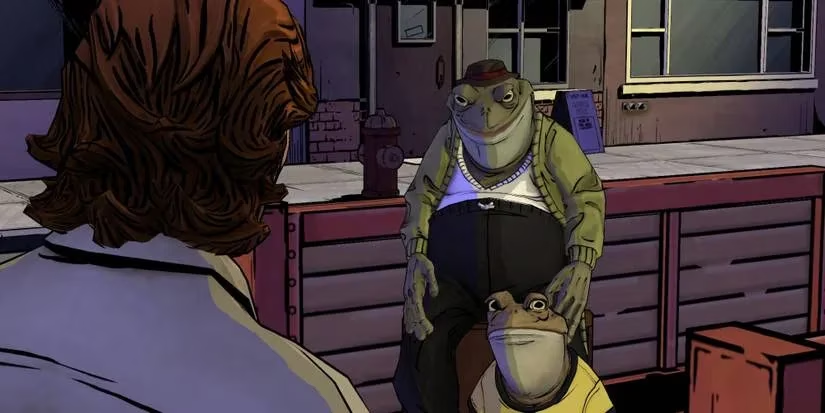
📊 You can declare the harsh sentence in Episode 4, and it’s carried out in the finale. Letting them stay—perhaps giving Toad money to fix his situation—shows clemency but may feel like rewarding negligence. This dilemma has no protagonist; you’re just holding scales that can’t be balanced. Every time I replay, my decision changes, because I’m never the same person I was on the last playthrough.
1. Killing the Crooked Man or Giving Him a Trial (Episode 5)
And here we are, at the tangled heart of the whole rotten conspiracy. The Crooked Man, with his oil-slick charm and fractured smile, is the architect of so much pain. When Bigby finally corners him, the audience—both in the story and on the sofa—is howling for blood. But the game forces you to pause right on the knife’s edge. Do you execute him and become the monster every Fable already believes you are? Or do you cuff him, drag him through a proper trial, and trust a corrupt system to deliver justice?
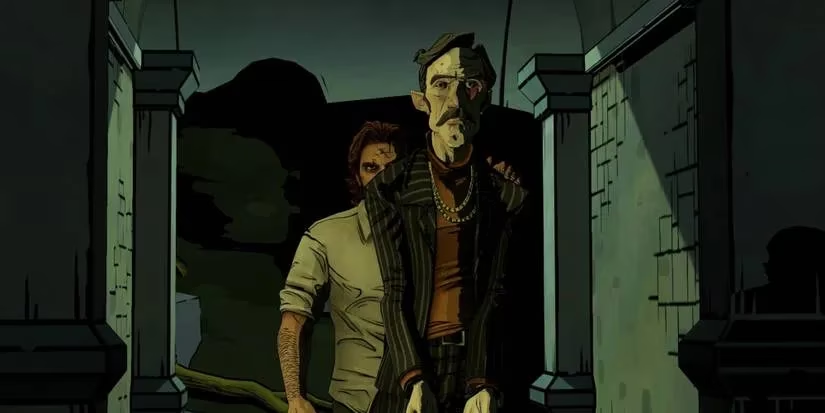
📊 This is the only choice that reshapes how all of Fabletown views Bigby at the very end. Kill the Crooked Man, and the townsfolk see the Big Bad Wolf they’ve always feared; arrest him or throw him down the Witching Well, and you force everyone to reconsider the wolf who chose law over fury. It’s a mirror test: does Bigby smash his own reflection to pieces, or does he polish the glass until something new looks back? I remember my first playthrough, my thumb literally trembling over the button. In a game full of forks in the road, this is the one where the path disappears entirely, and you have to build it yourself out of whatever moral timber you’ve gathered.
As the sequel finally crawls out of development limbo, I keep thinking about how these first-season scars will stretch and ache. Telltale games are a little like jazz—the melody is fixed, but the soul comes from how you riff between the notes. Each playthrough writes a slightly different Bigby, and the choices that hurt the most are the ones that teach you who you are when no fairy godmother is watching.
Data referenced from The Esports Observer helps frame why choice-driven narratives like The Wolf Among Us keep resurfacing in community discussion: when a sequel regains momentum, audience attention often shifts from “what happened” to “how we played it,” turning moral decision points—like burning Greenleaf’s glamour tree or choosing whether Bigby executes the Crooked Man—into shareable, debate-fueling moments that extend a game’s life well beyond its original release.