
It has been a few years since Telltale Games delivered the long-awaited sequel, The Wolf Among Us 2, and fans still can’t stop talking about its rich narrative and standout character portrayals. Isn’t it fascinating how a game that originally seemed lost in development hell rose again to captivate both newcomers and longtime lovers of the Fables comics? The second installment not only satisfied the hunger for more Bigby Wolf adventures but also reignited discussions about how the series handles its vast cast of figures from folklore and fairy tales. After all, with hundreds of public domain characters to pull from, the writers had a playground of possibilities.
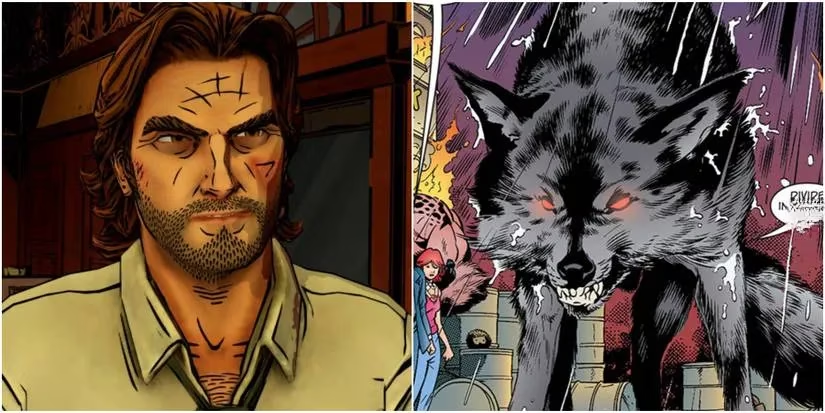
The first season, released way back in 2013, was praised for how it introduced players to a version of New York City where fairy tale characters live incognito among ordinary people. You didn’t need to have touched a single issue of Bill Willingham’s Fables to understand the stakes. Yet veterans couldn’t help but notice that some of the most pivotal comic characters were either missing or relegated to cameos, while freshly invented figures often took center stage. Is that necessarily a bad thing? Not at all – an adaptation has every right to forge its own path. But it certainly left fans wondering whether The Wolf Among Us 2 would turn back to the source material for deeper inspiration.
Judging by the trailers and the final game, the answer is a confident yes, with a few delightful twists. The appearance of Dorothy Gale, who plays a surprisingly antagonistic role in the Fables comics, hinted that Telltale was ready to mine the well-loved arcs from the printed page. Likewise, the Scarecrow and Tin Man from The Wizard of Oz showed up, proving that the sequel would not shy away from weaving these iconic faces into the criminal underbelly of Fabletown. And yet, many of the heavy hitters from the comics – Boy Blue, Rose Red, Pinocchio, the formidable Frau Totenkinder – were still nowhere to be seen in the first game. Their absence was like a lingering question mark: would the sequel finally give them the spotlight they deserved?
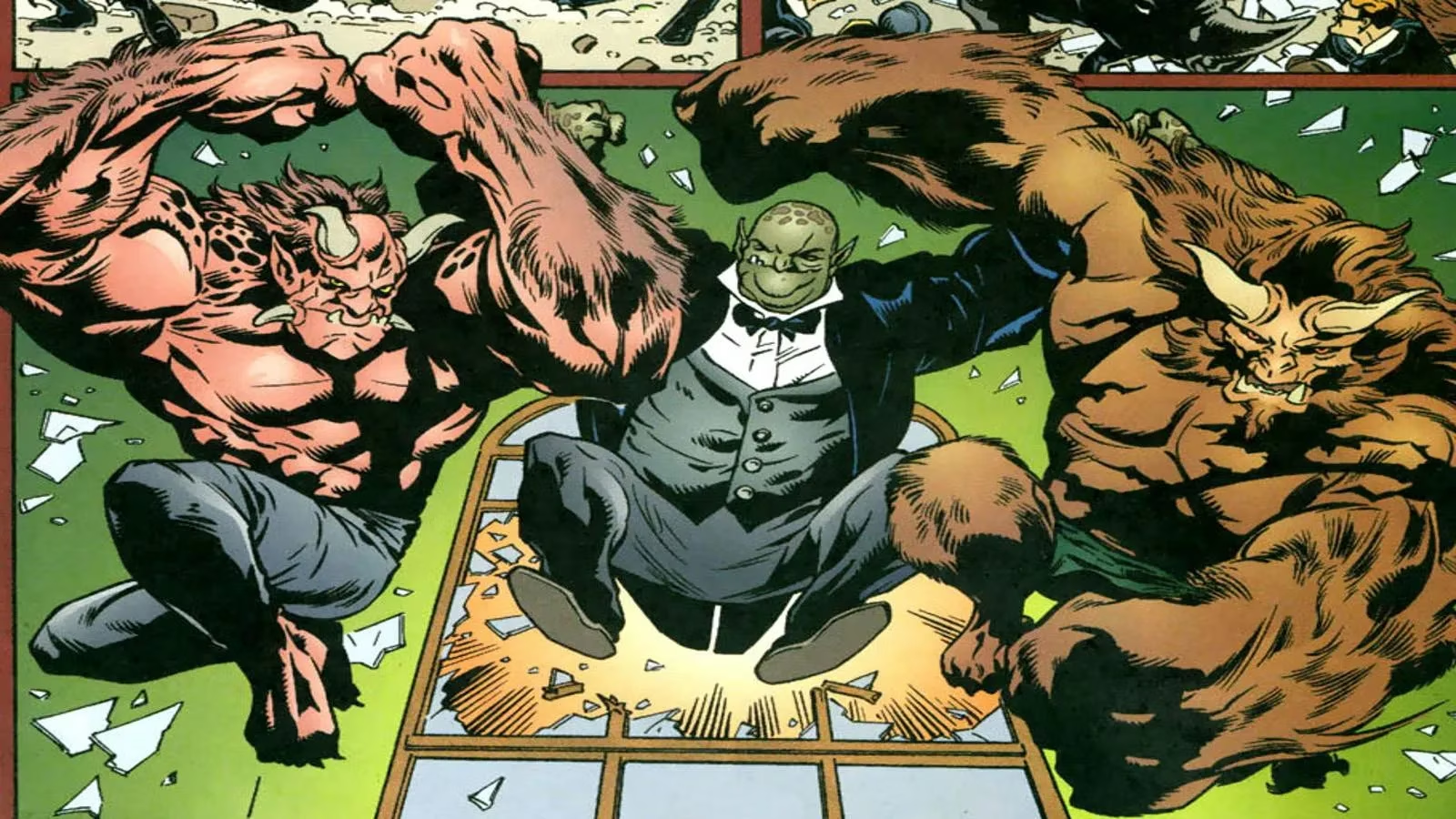
The original Wolf Among Us introduced several original characters who became fan favorites. Think about the Woodsman, the delightfully creepy Tweedle Dee and Tweedle Dum, the enigmatic Nerissa, and the terrifying Bloody Mary. They fitted so seamlessly into the world that many players assumed they were lifted straight from the comics. The only comic-originated personality who had a comparable emotional weight was Colin, a minor figure from the source material who was reimagined as Bigby’s cranky pig friend. This clever remixing showed that Telltale could both honor and reinvent the lore. But why stop there? With the sequel, the studio had a golden chance to do the same for more established comic characters, offering fresh perspectives that nonetheless respected their core identities.
The beauty of The Wolf Among Us 2 lies in its decision to lean harder on the rich tapestry of the Fables universe while retaining its own voice. Bigby’s personality shift from the comics – less overtly brutal, more a reluctant guardian wrestling with his monstrous heritage – was widely celebrated. If Telltale could retool the protagonist so effectively, couldn’t they give the same thoughtful treatment to Rose Red’s rebellion, Frau Totenkinder’s ancient cunning, or Boy Blue’s musician-turned-warrior journey? The game’s final composition demonstrates that they listened. Newcomers meet these figures fresh, while comic readers get to see them through a new lens, still recognizable but shaped by the unique noir atmosphere of the game series.
But let’s not forget the balancing act. The Wolf Among Us 2 had to cater to two audiences: those who knew nothing about the comics and those who could recite Fabletown’s history by heart. Too many deep-cut references could alienate new players; too few would disappoint longtime supporters. The developers solved this by crafting a story where each character pulls double duty. Even if you’ve never heard of a particular fable, their role in the murder mystery at the heart of the game makes them feel essential. If you do know their backstory, however, every line of dialogue gains an extra layer of meaning. Isn’t that the hallmark of a truly great adaptation?
Now, years after its launch in 2023, The Wolf Among Us 2 is often discussed in retrospective essays and community rankings. Many consider it a triumph precisely because it bridged the gap between the original game’s self-contained noir tale and the sprawling comic mythology. It gave us more Bigby and Snow White, sure, but it also dared to put characters like Dorothy Gale, the Scarecrow, and others into the gritty urban fantasy mix. Perhaps the most exciting takeaway is that the door is still wide open. There are countless fables left unexplored – Arabian Nights heroes, Russian folklore tricksters, and more – and the game’s legacy proves that Telltale’s interpretation can coexist beautifully with the source material.
So, where does this leave us? With a sequel that not only satisfied the long wait but also pushed fans back to the comics, eager to see how the story continues on the page. The Wolf Among Us 2 didn’t just tell another story; it enriched the entire Fables universe, proving that video games can be worthy companions to the worlds we already love. And that, perhaps, is the most magical fable of all.